

According to the Wall Street Journal, IMAX is exploring a sale and has already approached entertainment companies as potential buyers. As always with these reports, the fine print matters — the process is at an early stage and may not lead to a deal. But I’ve been around this industry long enough to know that when this kind of news leaks, it’s rarely an accident. Someone at IMAX is talking. Someone wants the bidding war to begin. And that should concern every film fan who values the premium theatrical experience.
Let me be clear about what’s at stake here. Last year, IMAX generated a record $1.28 billion at the global box office, a more than 40% increase over 2024 and 13% higher than its previous record set in 2019. IMAX’s domestic box office market share rose to a record 5.2% last year, up from 4.5% in 2024, while its global market share increased to 3.8% from 3.1%. IMAX is a company at the top of its game, expanding globally, and reaffirming projections for a record $1.4 billion in 2026. So why sell? Because when you’re at your peak, that’s exactly when you cash out.
The Three Scenarios
If IMAX sells, there are really only three types of buyers that make sense, and they are not created equal.
Option One: A Major Theater Chain
I could easily see AMC, Regal — one of the big exhibitor groups — absorbing IMAX and folding it into their portfolio. This is probably the most logical structural fit, but also the most financially unlikely right now. Theater chains are not swimming in cash. They’ve been rebuilding since the pandemic, and acquiring a company like IMAX would require capital they may simply not have. AMC has a market cap of $1.18 billion, Regal sits at $3.1 billion, and IMAX is at $1.8 billion. Smaller companies don’t buy larger companies - so AMC is out without another investor. Regal could make it work, but that would be a huge acquisition for a company of roughly the same size.
It would be a good outcome for the product itself — a theater chain has every incentive to maintain and grow the premium experience — but I’d put this at the lowest probability of the three.
Option Two: A Major Studio or Streamer
This is where it gets interesting. Netflix, Universal, and Disney could be one of these players could acquire the IMAX brand and reshape the theatrical landscape. The play here is straightforward: either you lock IMAX technology to your own films as a competitive moat, or you run it as a licensing business and collect fees from every studio that wants their movie shown on those screens. Both strategies have merit.
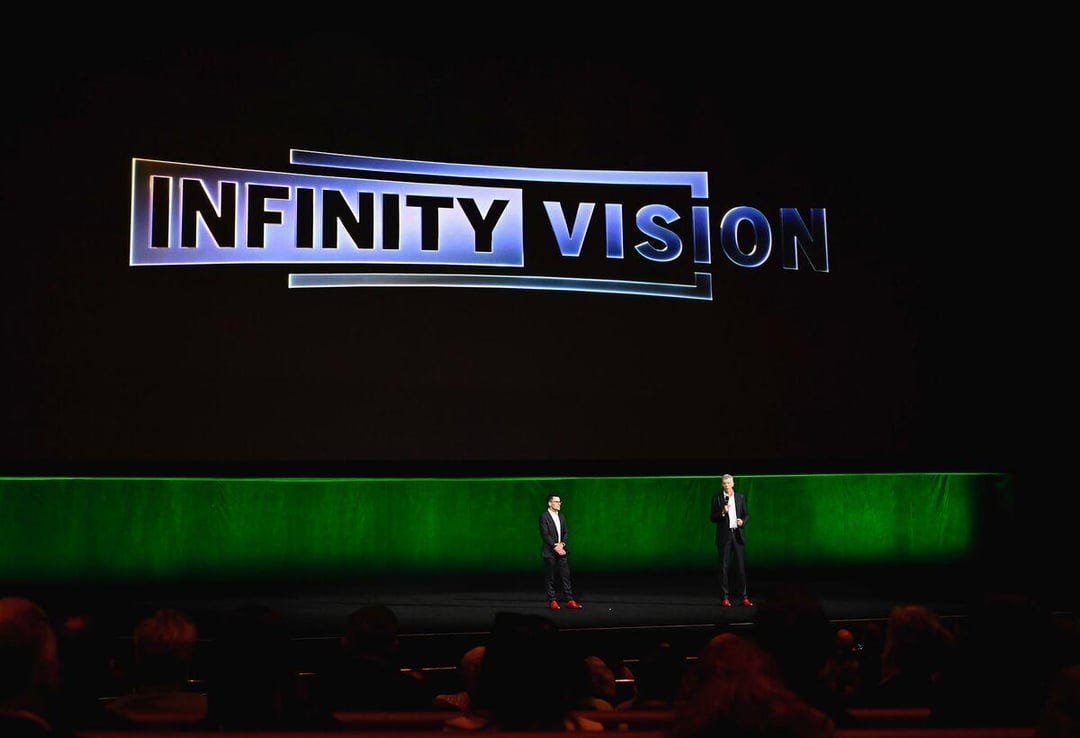
Disney makes a ton of sense. They just announced their Infinity Vision premium format. If we’re being honest, is essentially an advanced Dolby Cinema with better branding. It doesn’t do anything revolutionary. But if Disney acquired IMAX and rebranded it as Infinity Vision? That is a power move. Suddenly you’ve taken the most recognized name in large-format cinema and made it your own. Every Marvel film, every Pixar release, every Star Wars event becomes an Infinity Vision experience. The brand power alone would be enormous. Plus, they might be able to steal back some theaters from Dune!
The problem is whether Disney actually wants to spend the money. Wall Street analysts broadly see IMAX as an attractive asset that could draw interest from a variety of businesses, from Hollywood studios and theatrical partners — but wanting something and writing the check are two different things. Disney is in a consolidation mode of its own right now, and a major acquisition would need to pencil out against all their other priorities.
Netflix might be very interested as well, especially after losing out on the big Warner Brothers deal and having some cash to spend. Can’t you see Netflix taking on IMAX and turning them into Netflix theaters, delivering a premium experience for theatrical showings? They could get into the world of theatrical via the smaller subset of IMAX theaters, own the best technology to see a movie, and truly have a monopoly on being the biggest streaming service and the biggest premium theatrical format. For what Netflix was going to spend on Warner Brothers, this would be a drop in the bucket.
Option Three: Private Equity or an Investment Group
This is the nightmare scenario, and unfortunately, the one I think is most likely. Investment groups and PE firms almost always have more liquidity and leverage than a theater chain or even a major studio at any given moment. They can move fast and offer a premium price that’s hard to turn down.
To understand why this worries me quite a bit, you need to understand about IMAX actually operates: IMAX owns its theaters. Even when an IMAX screen is inside an AMC multiplex, IMAX owns that screen and owns that equipment. They are essentially renting floorspace from AMC.
But private equity has a playbook, and it never deviates. Step one: cut headcount and reduce overhead. Step two: charge more for the product. Step three: extract value until there’s nothing left to extract. What that means practically is there will be fewer people to maintain the equipment, fewer technicians who understand how to optimize the projection and sound, and ticket prices climbing from $20 to $30 or beyond. Consumers are going to get a degraded experience at a premium price. It is the worst possible outcome for everyone except the fund that bought it.
Think about what happened to your favorite food brands when they got acquired by a conglomerate. The recipe changed. The ingredients got cheaper. It tastes like garbage now. Same thing happens to clothing brands, car brands, software companies, etc. IMAX has become a true standard — one of the few remaining experiences that genuinely justifies leaving the house and paying a premium to see a film the way it was meant to be seen. I do not want to watch it get hollowed out.
This Is Just Another Domino
If you zoom out further than this single sale, you can easily see what’s really happening. IMAX is not an isolated case — it’s the latest entry in what I’ve been calling for years: the great consolidation of the entertainment industry. We’re watching it happen in real time.
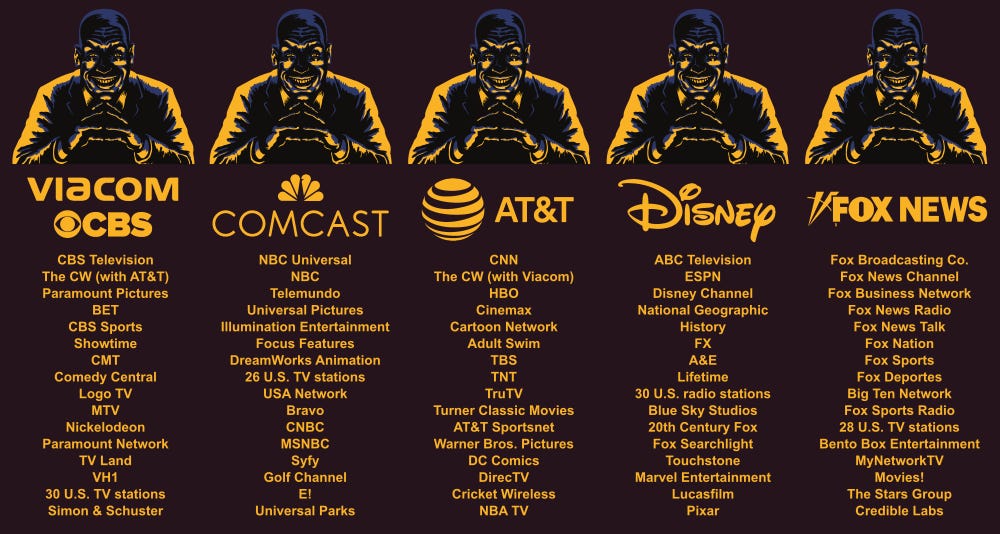
Letterboxd is exploring another sale. Drafthouse went through its own upheaval — Sony now owns it, and there’s been plenty of drama around that. Warner Brothers Discovery is still in talks to finalize the deal where it was acquired by Paramount. Streaming services continue to merge and absorb one another. Disney is consolidating Hulu and Disney+ into a single product. Paramount went through its own acquisition saga with Skydance. The walls are closing in on every corner of this industry.
The common thread is profitability. These companies are having a harder time staying independently profitable and growing at the pace that public markets or investors demand. And so they sell, they merge, or they get absorbed. IMAX is in a better position than most — they’re growing, profitable, and at a peak — which is exactly why now is the time for its leadership to consider an exit. Maybe people are ready to move on. Maybe after building something this significant, they want to hand it off while it’s still at its best. I understand that impulse completely.
In December 2025, CEO Rich Gelfond told shareholders that IMAX is “an incredibly valuable player, either as a wholly differentiated publicly-traded company or as part of a larger company.” That sure sounds like someone who was considering a sale already, even before this news broke.
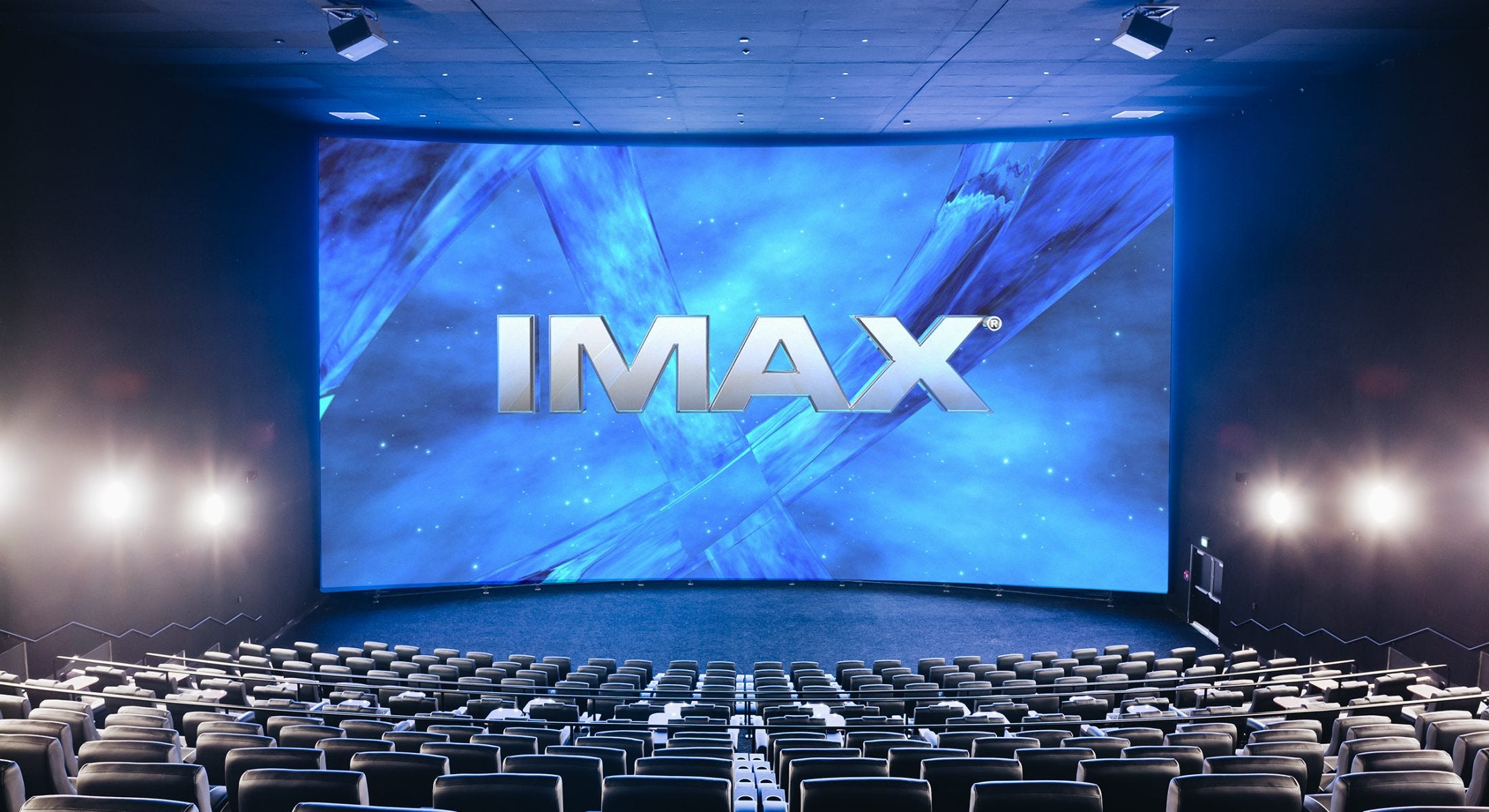
What It Means
We don’t know how this ends. The process is in a very early stage and may not result in a sale. But the signal is clear. IMAX is testing the market. News like this doesn’t leak by accident. Someone involved put this out into the world to see what the response would be, and once that genie is out of the bottle, it is hard to get it back in.
The best outcome is a buyer who understands that the value of IMAX is the experience — not just the assets, technology, or brand recognition. It’s the fact that walking into an IMAX theater still means something. It still delivers the best experience, in my opinion, of any theatrical showing. A theater chain gets that. A studio like Disney probably gets that. A private equity firm getting that would be the exception, not the rule.
When we look back on this decade in Hollywood, we’re going to see it as the moment when almost everything changed hands. Every major media property — the studios, the streamers, the exhibitors, the platforms — is up for grabs in one way or another. IMAX is just the latest name on that list. Whether it survives the transition intact is the only question that matters to me.
I'd put Apple as a leader into Option 2. Riding high with a market cap of 4+ Trillion, they could pay a 100% premium on IMax's current value and still make the purchases for less than 1% of their own. Imagine of Apple Vision headsets all get first access to the IMax version of studio releases. And both companies are known as premium products that people are willing to pay extra for. Seems like a good match to me.
You make a lot of great points and I think you're right: Option 3 seems to make the most sense of a group that would have the funds to buy it.