

I think a lot these days about the stories I grew up on. These were the stories that shaped how I saw the world and what I believed in starting at a young age. So many of those movies, books, and songs were about standing up to power, seeing through lies, and fighting against control. They were always about being the underdog, even when the odds seemed impossible. I have a fiercely anti-authoritarian brain (ask my high school teachers) and a lot of that comes from the cultural items I grew up on.
Look at Star Wars - everyone has seen it. George Lucas didn’t hide the message in those films too deep. He built the Empire straight from history, from fascism and the Nazis. He even took the term “stormtrooper” right out of the Nazi playbook. The visuals and the speeches, the obsession with control and order - it was all a warning to viewers about the dangers of fascism. I think it’s brilliant in its depiction because it takes these visuals from past regimes in our world and transports them to this technologically advanced fictional setting. Lucas is telling us this can happen no matter how advanced a civilization might be, and we should all be careful.
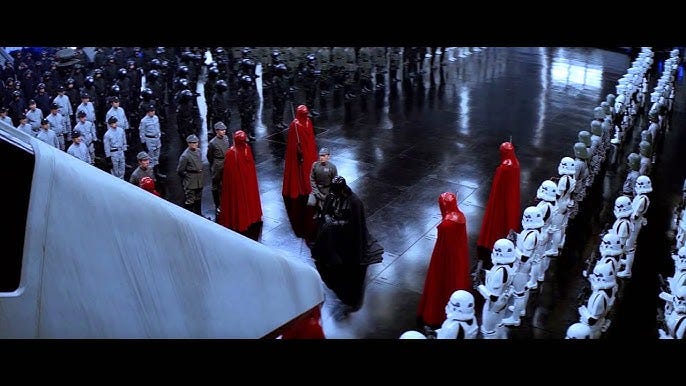
And at the the heart of it all, the Rebel Alliance was this group of regular people who fought back. They were farmers, smugglers, outcasts, even princesses with a strong moral compass, all coming together to resist something bigger than them. This is the whole point of the series, and it fascinated the entire world.
And this wasn’t just in Star Wars. Red Dawn showed high school kids fighting back against an invading army from an authoritarian nation. V for Vendetta warned about what happens when fear and control take over a nation. We all read 1984 in high school (even if you did the Cliffnotes) and learned what happens when truth gets erased and language is weaponized for control. We cheered when Indiana Jones punched Nazis. Audiences roared when Rocky took on Ivan Drago and won. Rambo fought corrupt authority and became a cultural icon. The Matrix showed us that most people would rather live in a lie than face uncomfortable truth.
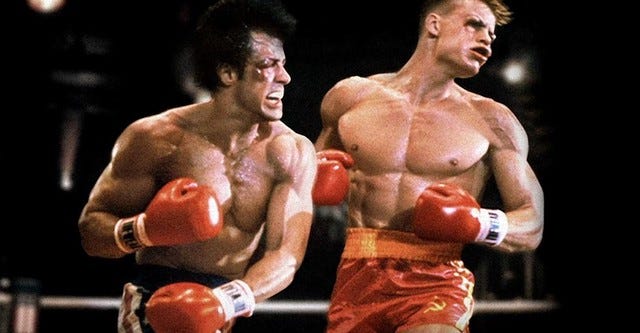
We used to understand this stuff, or at least I thought we did. We cheered for the rebels and the misfits who wanted to make life better for everyone. So how did we end up here, where half the country seems to have forgotten what side they were on in those stories?
Now we see people fighting for things like universal healthcare, fair wages, education, and compassion being labeled as “radical.” The people who care about others and fight for basic empathy and freedom to be who you want to be are treated like the problem. It feels like watching the Empire convince everyone the Jedi were evil. Palpatine spread lies to make the Jedi look dangerous, then used that fear to gain more control over the populace. Sound familiar?
The same strategies have happened throughout history, and they have unfortunately worked many times. But with all the stories my generation and the ones before mine grew up on, the millennials and Gen Xers, how did we still fall for it? Those who talk about equality and kindness get painted as dangerous, while the ones obsessed with wealth and control convince people they’re the ones being attacked. It’s the same story, just in real life now.
None of this means anyone’s perfect. Every movement has flaws and every politician lies. To be clear: I don’t trust any of them - another idea that was burnt into my anti-authoritarian brain. The Jedi weren’t perfect by any measure. Indiana Jones made plenty of mistakes. Frodo was tempted by the power of the ring. But being imperfect doesn’t make you the villain, even if the other side paints every imperfection as evil. There’s a big difference between people trying to make life better and people trying to keep others down for their own gain.
What really worries me is how easily we’ve lost sight of that. The constant flood of information and noise has made it hard to think clearly. Social media has rewired our brains to chase the next quick hit of outrage or distraction. Nobody stops to question anything anymore. We see a ten-second clip, and suddenly it’s the truth. People don’t even look beyond the headline, and they do not remember the past. George Orwell said it best: “if all others accepted the lie which the Party imposed—if all records told the same tale—then the lie passed into history and became truth”
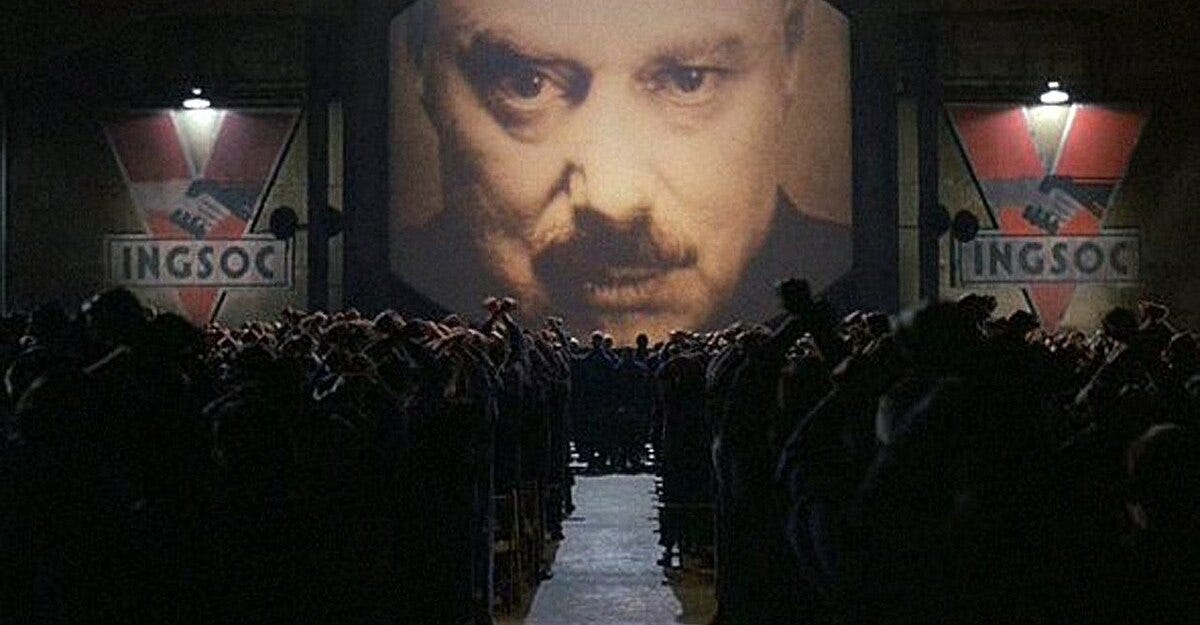
That’s how you erase the lessons we used to know. You don’t need to burn books and ban information when you can drown people in content. When the truth becomes optional and attention spans remain short, people forget what they learned from all their years of experience and education. Add in the demonization of education itself as “indoctrination” and you have a recipe for authoritarian rule.
So now we’re living in the stories we used to watch. There is so much propaganda, so much blind loyalty, and a lot of rewriting of truth. Museums are being curated to match political agendas. News outlets are compromised by billionaires (plug to support independent writers here on Substack!) Yet, somehow half the world still thinks they’re part of the Rebellion while marching in step with the Empire.
It’s truly confusing to me. I remember cheering for the people who stood up for personal freedoms, empathy, and truth. The ones who wanted everyone to have a fair chance at life, liberty, and happiness. That’s what those movies taught us. That’s what America and all Democracies were supposed to be built on.
And hey, I like a good villain as much as the next guy. They are an essential part of movies and culture, and they can make or break a story. But those are just stories. Now if we actually remembered the lessons from those stories and applied them to real life, maybe we’d stop cheering for the real world villains and start acting like the heroes again.
I also am glad to see this article. I grew up learning the true stories. I am in trouble constantly for pointing out what’s going wrong. I have actually used movie analogies and said, “I thought everyone cheered when someone fought for good?” My observation was that most people don’t digest the words being said for meaning. Minds are set in one mode and can’t be reached for discussion. And if I try, I get anger and aggression instead of discussion. It’s really sad. I miss the days of reasonable people. I’d love to see more content like this from writers. Thank you for this piece!
"The constant flood of information and noise has made it hard to think clearly. Social media has rewired our brains to chase the next quick hit of outrage or distraction. Nobody stops to question anything anymore."
I think about this a lot, the impact social media has had on our connection to storytelling and, by extension, each other. I wasn't a huge Star Wars fan growing up, but I was raised on Star Trek, and although it was never as popular, its messaging was so clear and resonated through the fandom. People just got it back then, or so it seemed. Today, conservative Star Trek fans are quick to dismiss arguments in favor of its messaging with, "It's not that deep," and "We can pick and choose what to connect with." And while, yeah, that's not entirely untrue to some degree, it feels like the intentions behind the art we consume, and the morals of the stories we tell, suddenly mean absolutely nothing. When everything is ephemeral, nothing really matters.
It doesn't help, of course, that whichever side of whichever argument you land on, you've got a vast echo chamber of support online. Everyone thinks they're the hero these days, whether they're calling for universal healthcare or cheering for mass deportations without due process. We're not only not questioning things anymore, we're no longer even discussing them.
We've lost the plot. And I thank you for this piece, which sums a lot of it up perfectly.