

I feel like I’ve been seeing Timothée Chalamet everywhere lately. He is currently promoting his new film Marty Supreme, and it is to the point where it no longer feels like a normal press cycle and has started to resemble cultural saturation by design. He’s popping up with comedian and influencer Druski on his parody audition show Coulda Been Records and doing music videos with EsDeeKid, a British rapper that people genuinely believed might secretly be him for a while. And if you have no idea what that last sentence was supposed to mean, that’s okay. You are probably over 30 or not chronically online like me.
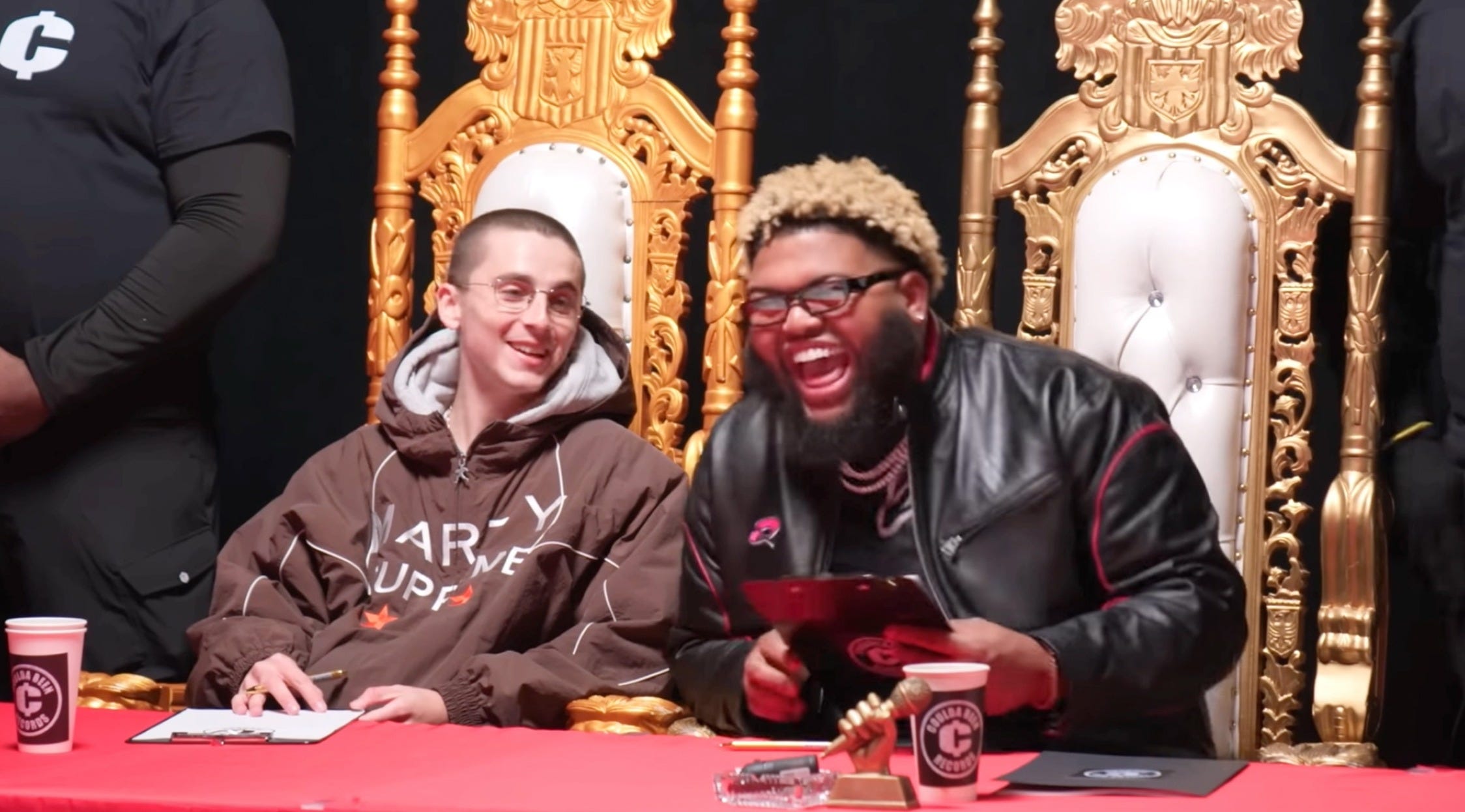
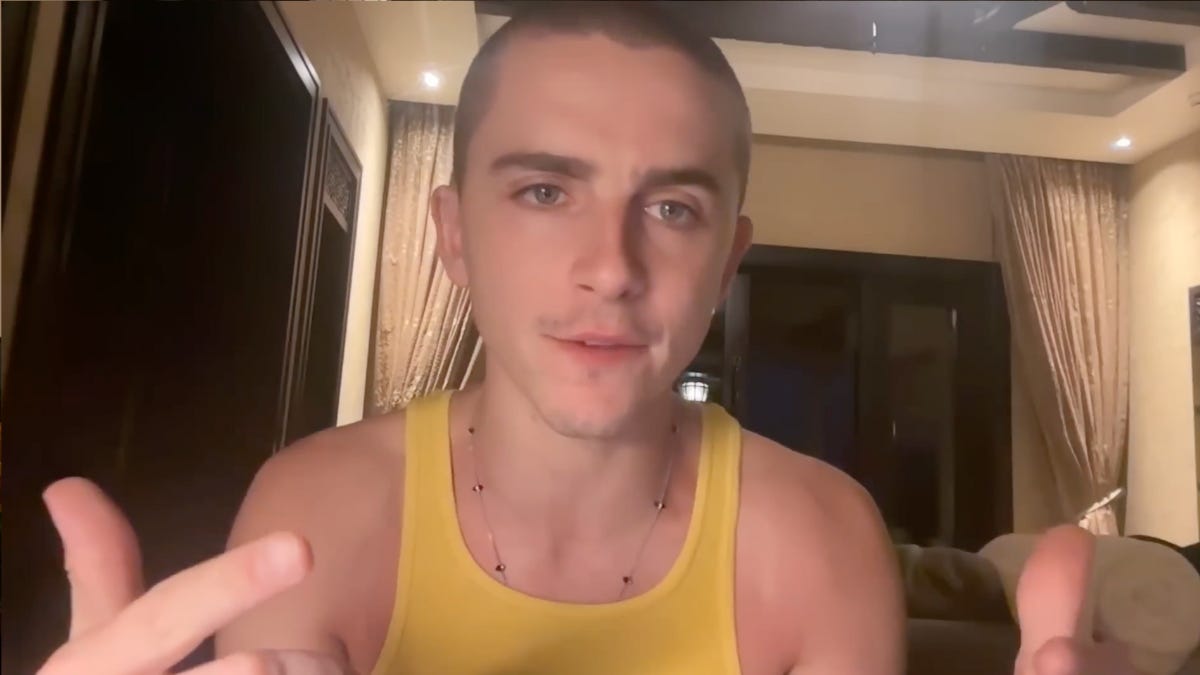
The A24 team is sending the now-famous Marty Supreme jacket to influencers and celebrities with massive social followings. There have been pop-up merch shops with lines down the block, listening parties for the film’s score, orange blimps flying overhead, a viral parody Zoom call with the Marty Supreme marketing team, branded Wheaties boxes, and even a live-streamed reveal of his bald look with a ping pong helmet to 40,000 viewers right before the film’s first screening at the New York Film Festival. Publications that track these campaigns across the film industry are all praising the work, as they should. It is good stuff!
Chalamet is doing everything, and more importantly, all of it is centered on him. His presence, his image, and his relationship with Gen Z are clearly the foundation of this campaign, and it’s not hard to see why A24 is leaning into that as part of a broader awards push. The scale is impressive, the coordination is tight, and the execution is undeniably effective at generating attention. I give Chalamet a ton of credit - he is spending a ton of time creating a larger than life, movie star persona that hasn’t been seen in Hollywood in years. Best of all, he seems to be having fun doing it. It’s refreshing. The harder question is whether any of it actually translates into people buying movie tickets.
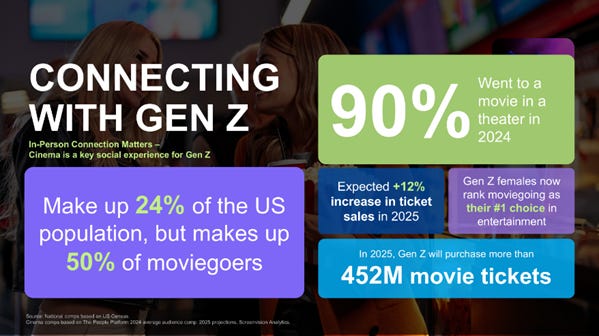
That question gets more complicated when you look at the data. Gen Z, despite the common narrative, actually goes to the movies more than any other age group, averaging around six theater visits a year. That tracks if you think about how different life looks in your early twenties compared to your thirties. We all had fewer responsibilities, more flexibility, more energy for late nights, and more disposable income make going to the movies a much easier decision. Targeting Gen Z isn’t misguided on its own. The issue is what the movie actually is.
Last year, Chalamet’s big prestige play was A Complete Unknown, which performed respectably at the box office with around $140 million worldwide. But once you factor in the $70 million budget, the marketing spend, and the Oscar campaign attached to it, it’s hard to view that result as anything more than breaking even. That was a Bob Dylan biopic, not exactly a Gen Z obsession, but still far more accessible than Marty Supreme. Even then, it didn’t come close to the cultural and financial reach of similar films like Bohemian Rhapsody ($910 million) or Rocketman ($195 million) - although I do think A Complete Unknown was the best film of the three.
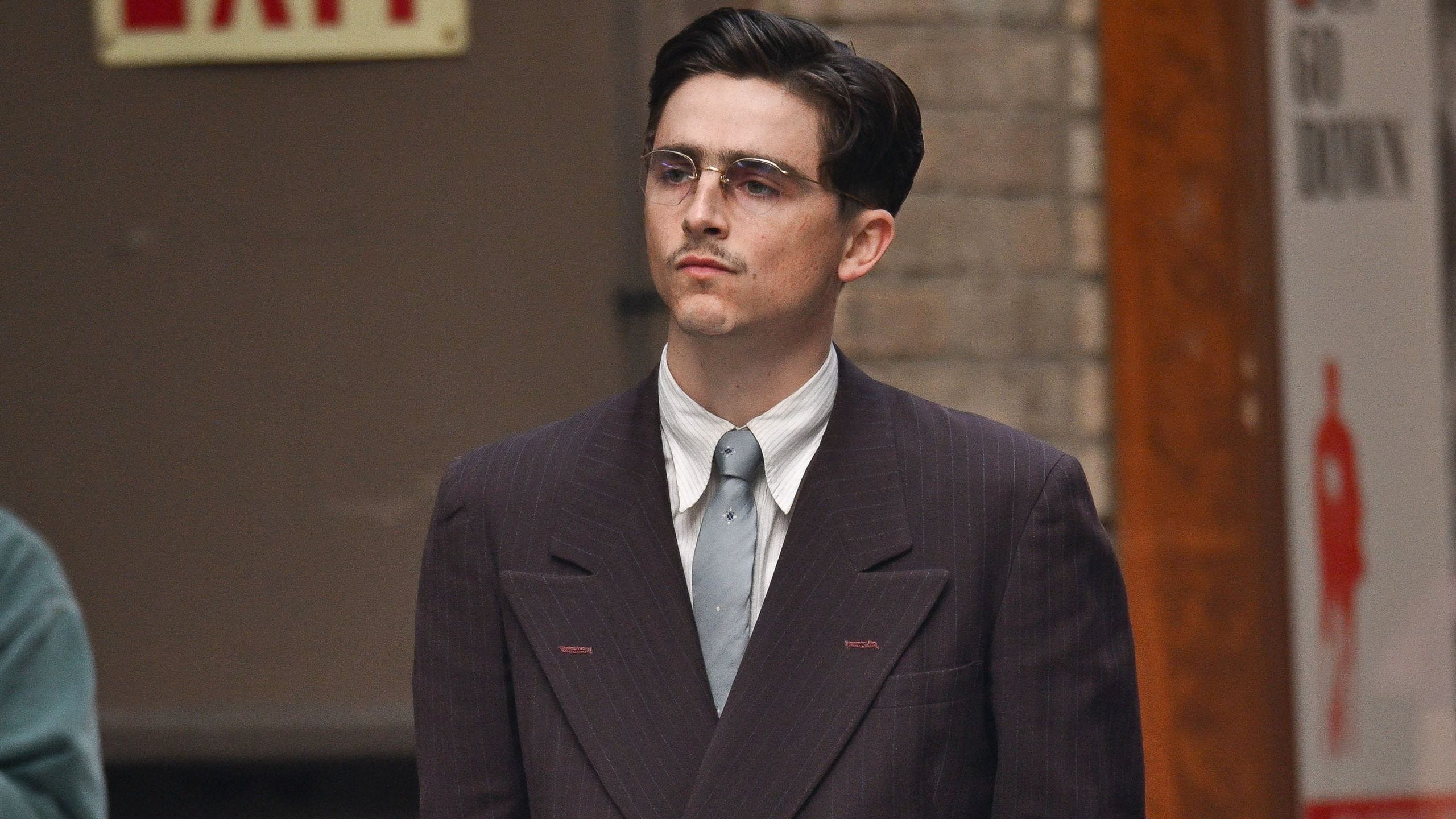
Marty Supreme is a fast-paced Josh Safdie film set in 1950s New York about a charismatic and wildly confident shoe salesman who hustles his way through the city while chasing an unlikely dream of becoming a world-class table tennis champion. Awesome, right? It sounds great to me. But it also doesn’t line up with the kinds of movies Gen Z has consistently shown up for in large numbers over the past few years. Their biggest theatrical turnouts have been driven by recognizable IP, fandom, and shared cultural moments like The Minecraft Movie, Five Nights at Freddy’s, Inside Out 2, and Deadpool & Wolverine, not prestige-driven dramas and thrillers, no matter how stylish or well-made they are.
That disconnect becomes clearer when you look at where the marketing energy is being spent. Marty Supreme’s campaign is almost entirely aimed at people who are chronically online (ask me why I have seen so much of the marketing) and understand influencer culture, even when the figures being used to generate buzz have little to do with movies themselves. Going on Druski’s show puts Chalamet in front of millions of teens and twenty-somethings, and sending jackets to celebrities guarantees endless Instagram posts, but it’s hard to know how much of that awareness turns into ticket sales. A lot of the engagement feels more like participation in a moment than genuine interest in the film.
This points to a larger issue with modern film marketing. Success is often measured in views, likes, and virality, not in whether people feel compelled to leave their house, buy a ticket, and sit in a theater for two hours. Influencer-heavy campaigns can generate massive reach, but reach doesn’t always equal revenue, especially when the audience knows the movie will be available to stream not long after its theatrical run. You can pay Kim Kardashian $5 million to come to your red carpet premiere and post about it - but I will guarantee there is not a positive ROI there.
The contrast is obvious when you look at recent monster hits like Oppenheimer, a three-hour film about the creation of the atomic bomb that made a billion dollars by selling the theatrical experience itself. Sinners is another strong example. The marketing from director Ryan Coogler and the cast focused on format, craft, and why the film needed to be seen on the biggest screen possible.
The Avatar films do the same thing. They are far from the best movies, and early reviews of the third film are saying it is basically just a re-do of the second one. But guess what - it will make a billion dollars because the marketing focuses on why you need to see it in a theater and have that experience. Those campaigns weren’t about vibe, influencers, or omnipresence online. They were about urgency, ticket sales, and why the theater matters.
Marty Supreme is doing the opposite, building an online ecosystem that’s excellent at generating buzz and selling merch (something A24 thrives on with their promotions), but less clearly focused on making the case for a theatrical experience. I have no doubt that many people in Gen Z will watch this movie. I’m just not convinced most of them will do it in a theater. Most likely, they’ll catch it at home once it hits streaming or is available to rent for $5.

Gen Z shows up for movies when they feel like shared cultural events driven by fandom and community, not just when a campaign is loud or everywhere at once. That’s why Marty Supreme feels like a real test case for this kind of marketing. I genuinely hope it works, because if it does, it could signal a meaningful shift in how films are sold. Early returns look okay - the limited release of the film is 2025’s biggest - but the second biggest of this year was The Phoenician Scheme and that only managed to gross $40 million. Marty Supreme feels like a similar situation - it has the pedigree and buzz for the NYC and LA audiences, but will that translate to global success?
But based on how often online buzz fails to convert into box office success, I’m not convinced a 1950s shoe salesman ping pong thriller is the movie that finally closes the gap between movie marketing and ticket sales. But boy do I hope I am wrong, because this generation of moviegoers is really the movie theaters’ last chance at staying alive. Plus, maybe they will start throwing a little more money my way as a creator! Until we see the proof though, the high of the buzz may still outweigh dollars in the eyes of many film executives.
This is a sharp read Jeff — and I think you’ve put your finger on the core tension perfectly.
The campaign is undeniably working at the level of culture, identity and participation. Where it’s less clear is whether it’s engineered for behavioural conversion — specifically, the friction-heavy act of leaving home, buying a ticket, and choosing a cinema over a couch.
Influencer-led saturation builds relevance, not necessarily urgency. The recent theatrical breakouts you reference (Oppenheimer, Avatar, even Barbenheimer) didn’t just sell awareness — they sold the act of going, the format, the shared moment.
Marty Supreme feels like a masterclass in cultural marketing, but a live test of whether culture alone can now substitute for theatrical intent. If it works, it’s a genuine shift. If it doesn’t, it reinforces the idea that reach ≠ revenue unless the behaviour is explicitly designed for.
Either way, this is exactly the right film to be asking the question.
Excellent points Jeff! I'm wondering how the film will do also. I think Chalamet has such a huge fan base that people will go and see whatever he does. Plus, the buzz for his performance has really been building. It is a great movie that will likely stand the test of time.