

The two biggest movies in America right now are Obsession and Backrooms, low-budget original horror films made by filmmakers who got their start on YouTube, and the mainstream media is losing its mind over this. Everyone is saying that this will “change the future of moviemaking.”
They are not wrong that something significant is happening, but they are very wrong about what it is. Let’s start with the numbers, because the numbers are genuinely extraordinary and should be celebrated.
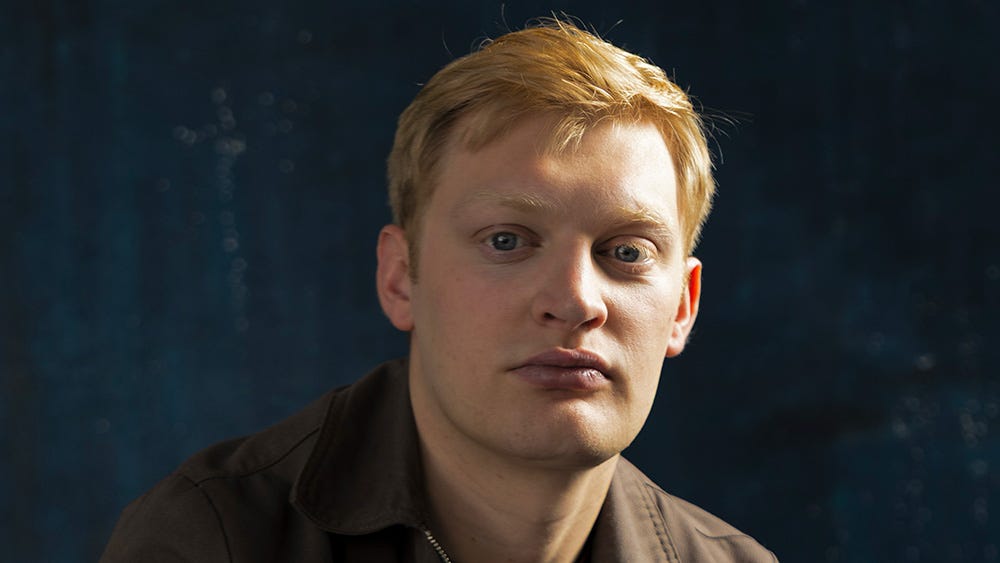
Curry Barker made Obsession for $750,000. After three weekends in theaters — and three consecutive weekends of box office growth, which almost never happens — the film has crossed $148 million worldwide. Focus Features acquired it out of TIFF for $15 million, so they are thrilled. It is a historically anomalous performance, and it deserves to be recognized as such.
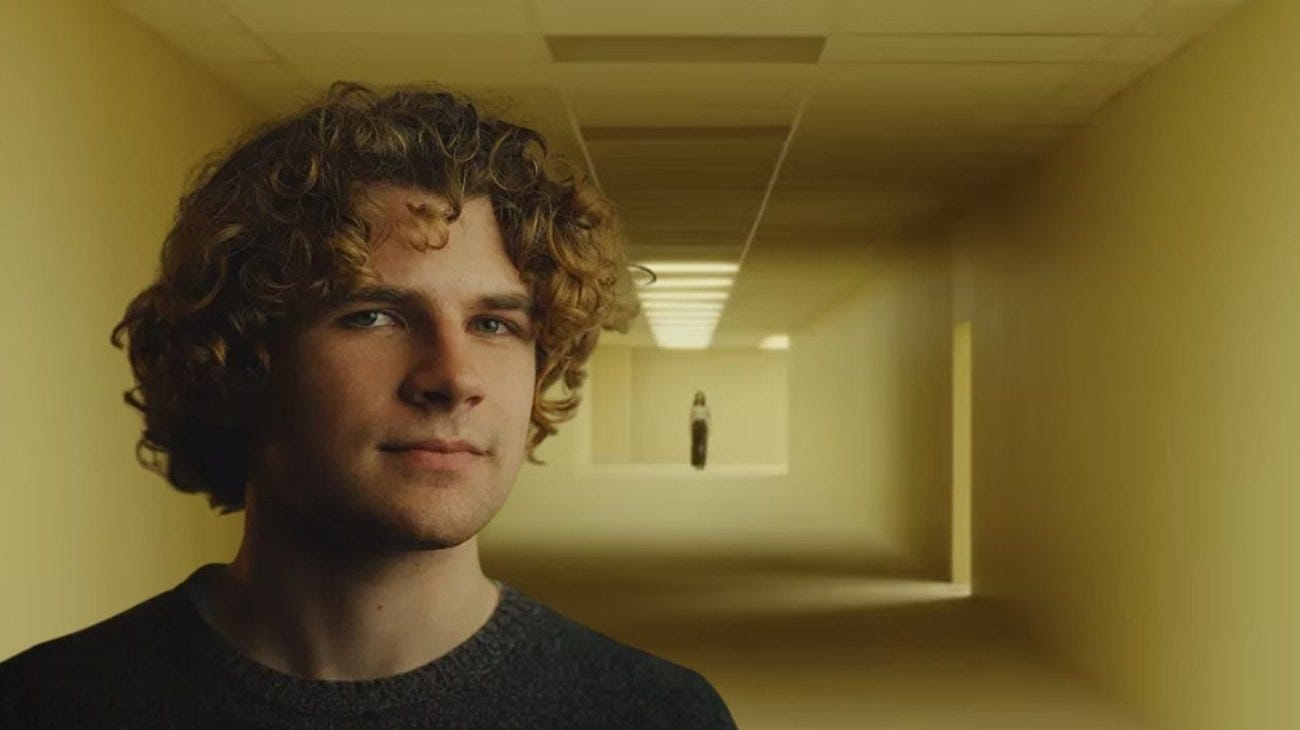
Then Kane Parsons, who is 20 years old, opened Backrooms this past weekend to $81 million domestically and $118 million globally. That is the largest opening in A24’s history — more than triple the previous record set by Civil War in 2024. Parsons is now the youngest filmmaker ever to land the number one movie in America, breaking the record held by Josh Trank, who was 27 when Chronicle opened at number one in 2012. Backrooms was made for roughly $10 million.
Meanwhile, The Mandalorian and Grogu — a Star Wars movie with the full Disney machine behind it and three seasons on Disney+ — dropped 70% in its second weekend and landed in third place behind two original horror films. That detail is getting buried in the coverage a bit, but it might be the biggest story of this whole thing.
The Media Is Missing the Point by Treating These Two Films as the Same Story
Every major outlet is packaging Obsession and Backrooms together as if they are the same phenomenon, but they are not. They are two different kinds of success, built on two different models, and conflating them leads to the wrong lessons.
Obsession is a micro-budget supernatural horror film with no pre-existing IP. It premiered at TIFF, got into a bidding war, and then word of mouth carried it from a $17M opening to a $23.9M second weekend to a continued climb in week three at $26 million. That kind of sustained momentum is earned purely by the quality of the film, word of mouth through social media, and the community Barker built around his work. It’s a grassroots success story in the most literal sense.
Backrooms is a different animal. It is adapted from Parsons’ viral YouTube series, which already had a massive, devoted following built around the liminal space horror concept. That built-in audience is real and it showed up — 88% of the opening weekend audience was under 35. A better comparison for Backrooms is Five Nights at Freddy’s, which also converted an enormous existing internet audience into a theatrical event.
Both films are impressive. But the reasons they are impressive are different, and treating them as one story produces lazy analysis.
YouTubers Changing Hollywood Is Not a 2026 Development
CNN’s headline this week read: “YouTubers are setting box office records. It could change the future of moviemaking.”
The article opens with this quote:
The biggest two movies in America right now, “Backrooms” and “Obsession,” come from twentysomething filmmakers who honed their craft on YouTube.
Their films were made with relatively low budgets and were marketed online. Now that they’re filling theaters with teens and young adults who rarely show up at the movies, all of Hollywood is paying attention, with experts predicting that studios will copy this moviemaking model many times over.
This is presented as breaking news, but it really is not.
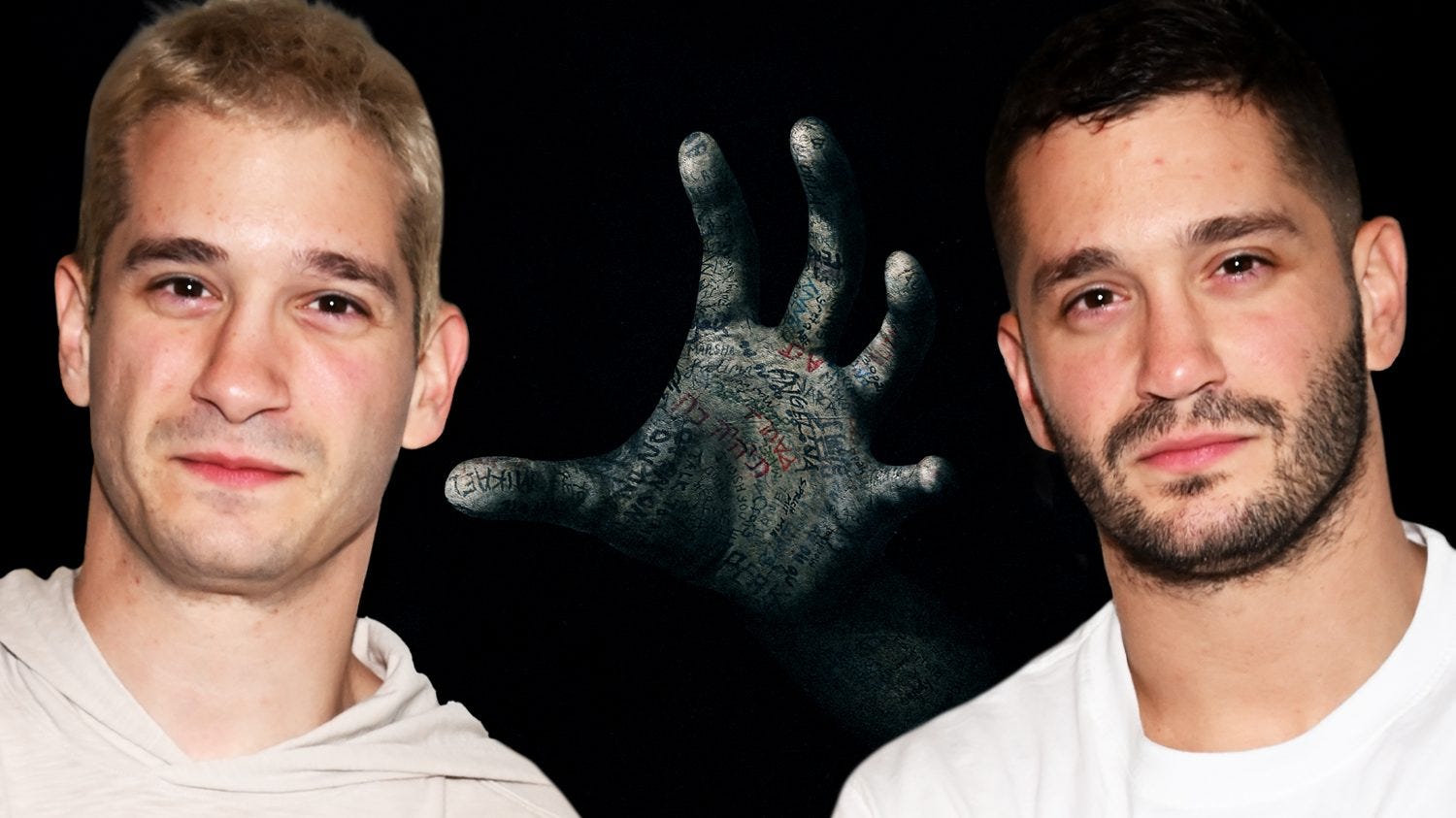
In 2023, Talk to Me became A24’s biggest horror hit at the time, surpassing Hereditary. It was made by the Philippou Brothers — Danny and Michael — who built their following on YouTube with a channel called RackaRacka. At the time, articles ran across every major outlet saying the brothers were “changing the industry.” The conversation was nearly identical to what is being written right now.
Before that: Iron Lung, released in 2025, came from Youtuber Markiplier. Shelby Oaks, released in 2024, came from Chris Stuckmann, a film critic and filmmaker who built his audience entirely on YouTube. Neither of those films performed at the level of Obsession or Backrooms, but they were operating on the same model — creator-to-filmmaker pipeline, built-in audience, low budget, horror. The pattern was already there, but the industry just wasn’t paying full attention yet.
Young Audiences Have Always Gone to the Movies
The other persistent error in the coverage is the framing around young audiences “coming back” to theaters.
Millennials and Gen Z make up approximately 71% of movie ticket sales in America while representing roughly 43% of the population. They are not absent from theaters. They never were. But they are selective. They show up for films that feel like events. They want original stories with cultural momentum, or films tied to communities they already belong to. They will show up in week two, three, and four of a film’s release as hype spreads on social media. It is a great argument for expanded theatrical windows. Focus Features had to learn this lesson quickly - they had planned for a June 2nd release of Obsession on digital rental platforms for audiences to watch at home, but they pushed that back quickly to their standard 45 day window when they saw the reaction to the second weekend.

Longlegs. Obsession. Backrooms. Five Nights at Freddy’s. Hereditary. Get Out. The Substance. Weapons. Sinners. Iron Lung. These are not films that dragged reluctant young audiences back to the cinema. These are films that gave them a reason to show up that franchise fatigue could not provide.
The “young people don’t go to movies anymore” narrative is demonstrably false. What’s true is that young audiences don’t go to every movie anymore. They are not going to see the fifth iteration of a franchise they have no attachment to. That is not the same thing as abandoning the theatrical experience. The industry conflates these constantly, and the coverage follows suit.
A Long Tradition That Keeps Evolving
Horror has been the most reliably profitable genre in Hollywood for decades, and it has consistently served as the launching pad for major filmmakers.
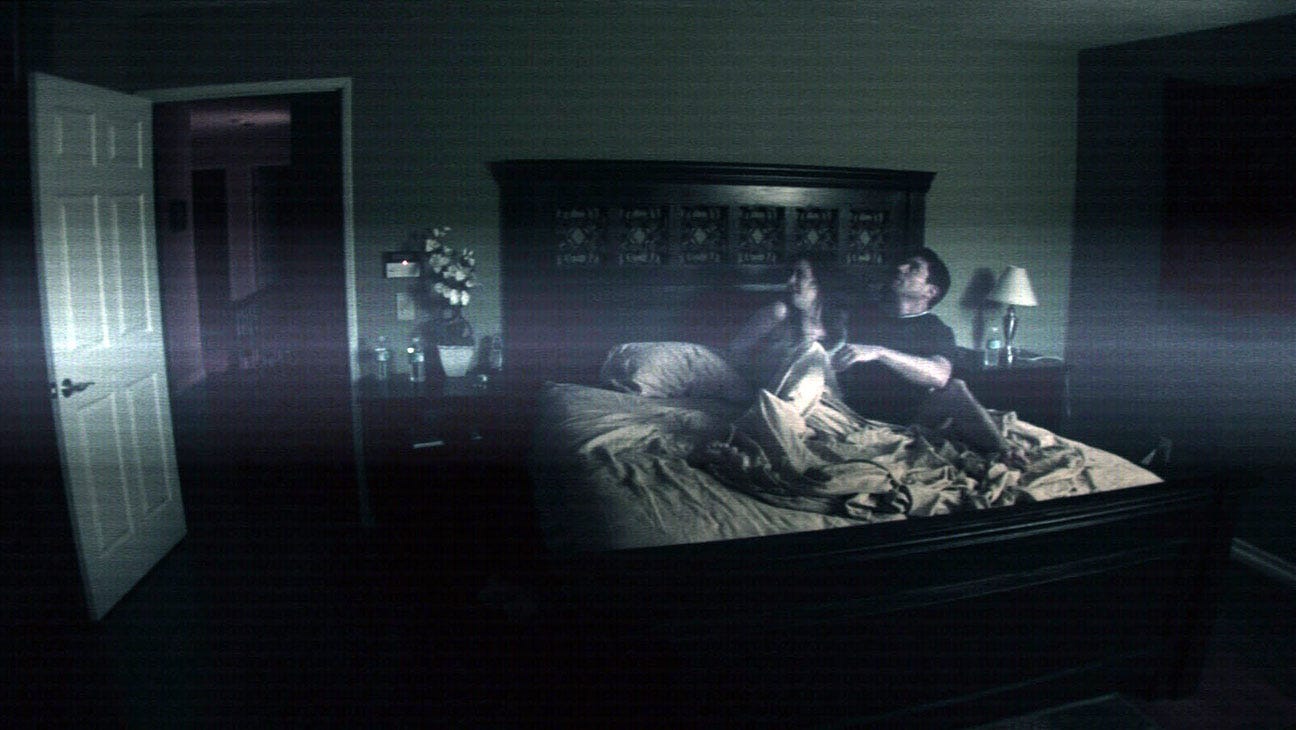
Halloween launched John Carpenter in 1978. The Blair Witch Project redefined what a horror film could be made for. Paranormal Activity’s massive success is the foundation for Blumhouse — without it, Blumhouse as it exists today does not happen. Sam Raimi, Peter Jackson, Wes Craven, Tobe Hooper, George Romero, James Cameron, Steven Spielberg, Kathryn Bigelow, and Brian De Palma all started in horror. More recently, we have Jordan Peele, Zach Cregger, and Oz Perkins. Now Curry Barker, Kane Parsons, and the Philippou Brothers. The genre has always been the most accessible entry point for a filmmaker working with limited resources and maximum creative freedom.
What changes is the medium that precedes the transition into film. In the 1960s and 70s, many directors came up through television. That was the accessible medium of the time. Today, the accessible medium is YouTube and short-form social video. That is where young creative people are building audiences, developing a visual language, and finding out whether they have something to say. The pipeline from that space into film is not surprising. It is obvious. It has been obvious for ten years. But the mainstream media and Hollywood are ten years behind, and it is showing with recent year’s box office returns.
This same pattern is playing out across every creative industry. YouTube shows become network series. Social media stars are selling out stadiums as musicians, landing leading roles in films and TV, writing bestselling books, and building consumer brands that compete directly with legacy corporations. Prime Energy came into a saturated category and dominated. Mr Beast’s chocolate bars went up against a brand juggernaut like Hershey. Emma Chamberlain’s coffee brand became a cultural presence. The mechanism is the same in every case: build an authentic audience, then leverage that trust into a new context. The filmmakers doing this are not an anomaly. They are part of a continuous pattern that the mainstream has been slow to recognize.
The Right Lessons, and the Ones Hollywood Will Probably Learn Instead
The correct takeaway from Obsession and Backrooms is not “we need to find YouTubers and put them in charge of projects.” The correct takeaway is that audiences respond to original, creator-driven work made by people who have a genuine relationship with their audience or can tap into the culture of the moment. The YouTube background is incidental, but the authenticity is not.
Hollywood’s history with moments like this is not encouraging. When something works, the immediate instinct is to replicate the surface feature rather than the underlying quality. After Blair Witch, studios flooded the market with found footage films, most of them missing the point. After Paranormal Activity, it was the same thing. After Get Out, the hype about “elevated horror” produced a lot of films that chased the magic without any of the craft. The next step is predictable: studios will start approaching YouTube creators with large subscriber counts and offering them projects, without distinguishing between someone who has a genuine cinematic vision and someone who has learned to perform for an algorithm. Some of those projects will work, but most will not.
The filmmakers who will matter in the long run — the ones who actually represent the future of the medium — are not the ones with the most followers. They are the ones using whatever platform is available to them to tell stories that nobody else is telling, in a language they developed themselves.
The next Steven Spielberg is making short films on an iPhone right now and posting them somewhere. The next Stephen King is writing horror on Reddit or telling stories on TikTok. The next great cinematographer is shooting their friends on Instagram and figuring out lighting and camera angles through trial and error. I am not predicting this — this is happening today across the world. This is the reality of where filmmaking and all creative endeavors are headed.
One person that doesn’t get enough of a shoutout is David F. Sandberg. While obviously older than any of these other filmmakers you named, he did start off in YouTube as well! I know the quality of his last couple movies have not been strong but he still caught the eye of the industry still.
Great article and some insightful observations. It so true that the movie watching audience is crying out for originality and it feels like the only genre still doing this is horror