

Doomsday has come early to Hollywood, and no, I am not talking about the new Avengers movie. I am of course referring to the news that Netflix has backed out of the bidding war over Warner Brothers, leaving Paramount as the current sole suitor for the legendary studio.
Nepo baby billionaire David Ellison got his way with the help of daddy Larry Ellison’s money, some banks that I think are making an insane investment, and a boat load of money from the Middle Eastern Sovereign Wealth Funds, backed by Saudi Arabia, Qatar, and the UAE.
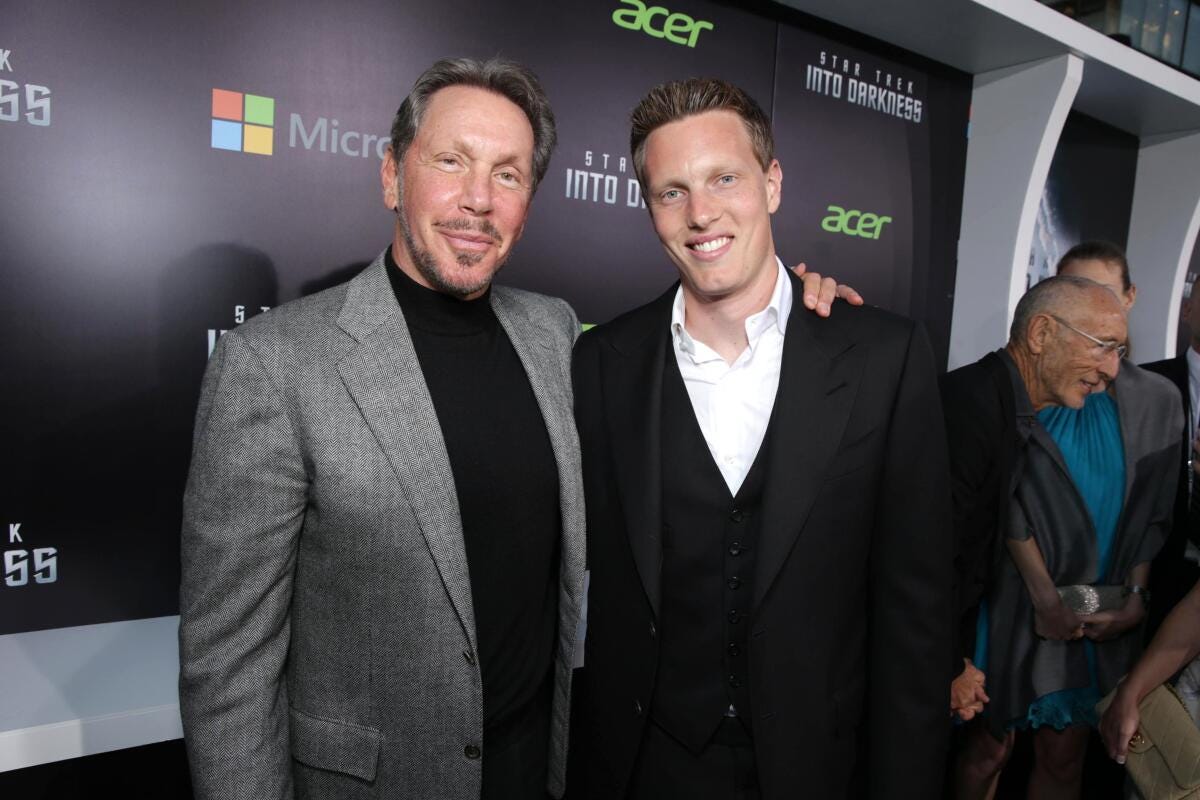
First off, its important to understand what this means if the deal goes through. If Paramount is successful in their bid, passes regulatory boards, and wins the WB shareholders votes, it means that the Ellison family now owns CNN, CBS, TikTok, Warner Brothers, HBO, Paramount, Oracle, and various cable channel stalwarts like MTV, Comedy Central, HGTV, TLC, TBS, TNT, Nickelodeon, Discovery, and Cartoon Network.
Should one family own all of that? No, in no right world is one family in charge of all of that technology, entertainment, news, and media. It is insane, and scary. No matter which side of the political aisle they fall on, this would not be good for anyone who wants creative freedom and free expression. If I had to rank the greatest threats to America right now, Larry and David Ellison are at the very top. Forget the President. Forget foreign countries. Forget any politicians. The Ellisons own all of the major media streams, the news, the social media apps, and the technology - they can control any narrative they want. It is terrifying and truly unprecedented.
So while Paramount and Warner merging might be better for movie theaters and the theatrical experience than Netflix (which was unproven anyway, based on how Netflix said they would support theatrical exhibition with the WB deal), it is almost certainly worse for all of the people working under the movie studio system and the media ecosystem in America as a whole.
Secondly, I think it is important to point out the real winner here - Netflix. Netflix is still the most dominant force in entertainment in 2026. They are the cultural cornerstone that WB and Paramount used to be. The only companies who match up with Netflix at this point are Comcast/Universal, Disney, Amazon, and Apple. And as much as Netflix probably wanted Warner Brothers, they are walking away with a $2.8 billion break up fee (that is a lot of content!), and they have convinced one of their major rivals to overpay in a bad deal. Paramount is losing hundreds of millions every quarter. So is Warner Brothers. If I am Netflix, I am going to sit back, watch this all burn down under the failed leadership of David Ellison (who has proven he cannot run a media company so far with Paramount) and scoop up what remains in a few years.
Is that ideal either? No, not at all. It means we are likely looking at a world in 2030 where the major media companies left will be Disney, Apple, Amazon, Comcast/Universal, and Netflix. The consolidation will continue, creativity will be even harder to express in this system, and it will mean we see less originality than we have now. But it does open up opportunity...
A24, Mubi, NEON, Bleecker Street, IFC Films, Plan B Entertainment, even Sony/Columbia - these are the names who can also benefit from the collapse of the traditional studio system. They can scoop up IPs for cheap, expanding into their own franchises, but they also become the voice of the independent creator. The days of the $300 million blockbuster that needs $1 billion at the box office to recoup costs is going to go away. Even James Cameron is starting to admit that the Avatar movies aren't making enough money to keep investing.
The future of all of this is the low risk, high reward. The $5 million movie that can win an Oscar and gross $100 million. The $1 million horror movie that cracks $50 million at the box office. These are the types of projects that are letting the A24 and NEONs of the world rise over the last decade, and the same projects the other studios are ignoring as they lose hundreds of millions and keep rising prices on their increasingly disappointing streaming services.
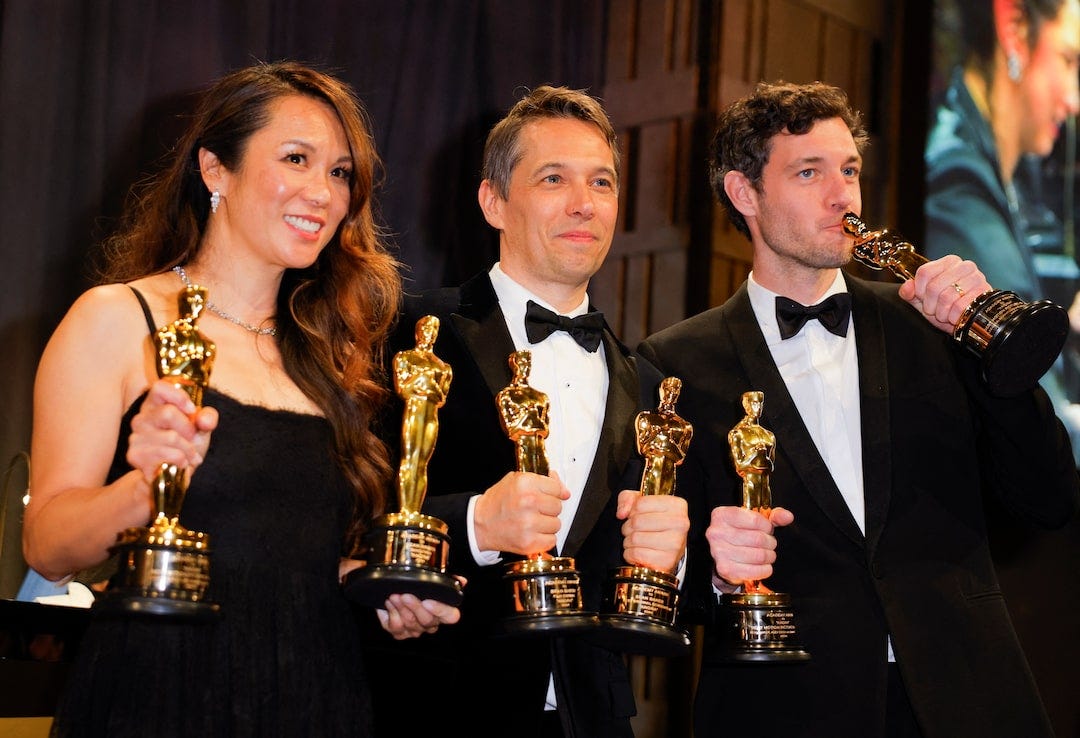
2030 might look like Netflix, Disney+, Universal, and a host of indie players working smaller budgets and keeping theaters alive. HBO will almost certainly fall off under Paramount ownership (look at what Paramount+ has done - nothing), the movies will struggle, and the attempt to recoup this massive $111 billion deal (debt) that they do not have the revenue to cover.
So in my eyes, the studio system is dead. It is Doomsday for Paramount and Warner Brothers. Netflix is going to take their cool $2.8 billion and make some shows for "free" with that money. And the Ellison family will hopefully run things into the ground and sell it all off to others - doing the job the regulatory boards will not by simply failing at running a successful media company.
Speaking of the regulatory boards, that is still the best outcome in my eyes, whether it was Netflix or Paramount winning the bidding war. I have faith that either they will work to block this, drag it out long enough to hopefully get in front of a new administration in the US, or simply make it too difficult and have both parties step away. The more people who own media, the better, so my preference is definitely that Warner-Discovery stays alive on their own.
Ultimately, nobody knows what will happen. Only one thing is certain - the Ellison family is not good for America. They are a major risk to the continued imbalance of our economic system, a major risk to the art form of TV and film, and a major risk to whatever is left of unbiased news and journalism. And all of that is bad, no matter what you think about their politics. And I sincerely hope with all of my heart that they fail, with deep sympathies for all the employees who will get caught up in their insanity for no fault of their own.
A lot of the comments here are focused on the politics of consolidation. The more interesting shift is the economics Jeff touches on toward the end.
Over the past decade we’ve seen the rise of a very different model; disciplined budgets with asymmetric upside. The $1–5M film that can travel through festivals, awards, and global audiences, or the $1M horror that can break out commercially.
That’s essentially the lane A24 and NEON have been refining. Not chasing massive swings, but building a portfolio where one breakout can carry the slate.
While the majors chase $200M bets, the smarter play right now might actually be the smaller film designed to punch far above its weight.
Such a punchable face…. I’m sorry but I’m disgusted at these Nepo babies.