

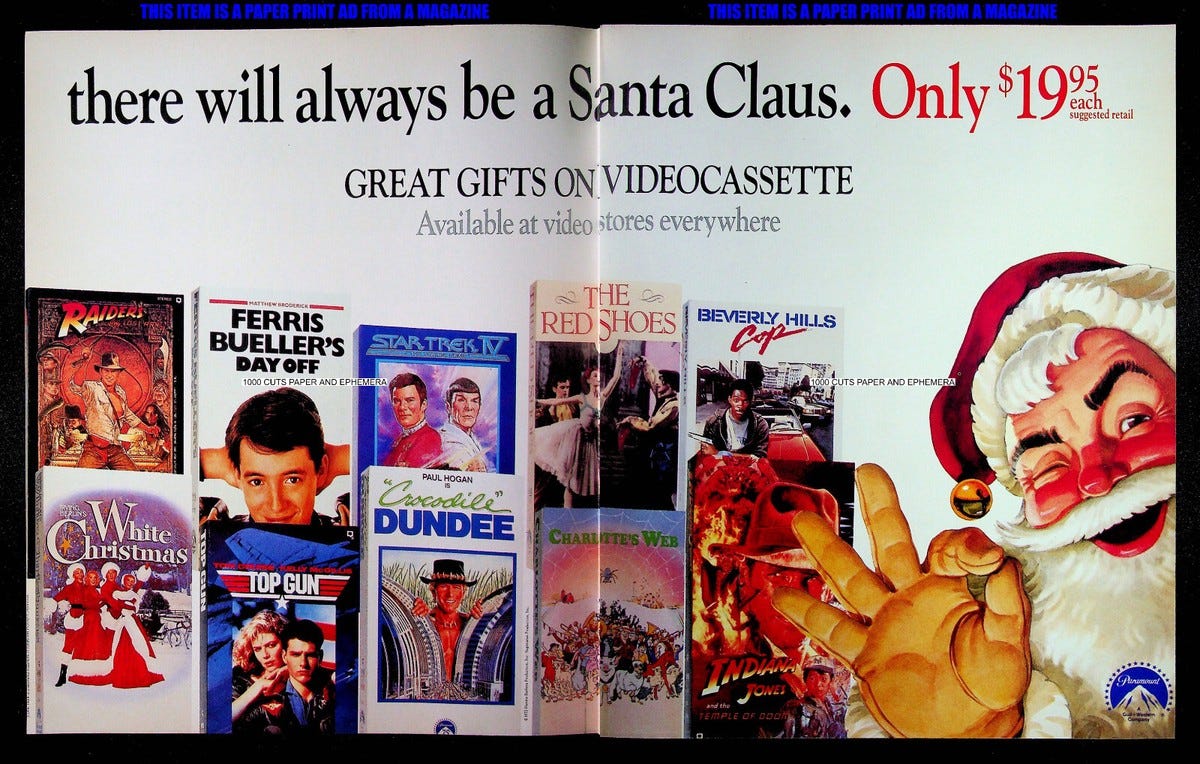
Going through my movie collection the other day, I found a sealed Jurassic Park Laserdisc with a $49.99 sticker price. It cost fifty dollars to watch a single movie at home in 1994, and this was 16 months after it was released in theaters. That’s over $110 in today’s money. Can you imagine? $110 for one movie on physical media!
But that was the reality of home video for a long time. If you wanted to watch a movie in the comfort of your own home, you either paid a serious amount of money to own it, or you waited however long it took for the most popular films to show up on cable. Or you made the trip to the rental store and paid around $5 for a tape — which, adjusted for inflation, is about $12 today. That is more than most standard 4K movie rentals which are delivered right to your TV in an instant today.
I’ve been seeing a lot of discourse lately about Project Hail Mary being available to watch at home just two months after its massively successful theatrical run. It’s a movie you really should see in a theater, but not everyone has that option. The issue people are taking is around the cost of this early access rental. The rental is $20 and the digital purchase is $25. The complaints are mostly the same — this is too much money, it’s predatory, it should be included with Amazon Prime, etc.
This is a brand new, major studio release — available in your home, on your schedule, just two months after it hit theaters — for under $25. A kid in the 80s or 90s would have dreamed of that kind of access. Think about how long people had to wait for Star Wars to come to home video. Part of the reason it sold so many theater tickets is that people went back multiple times because they genuinely didn’t know when they’d see it again.
There’s a broader shift happening in how people think about paying for art. They want music for free. They want movies for free. They assume that paying for a Netflix subscription means they should have access to every film ever made. And I genuinely don’t know how we got here, because by any objective measure, this is the best time in history to be a movie fan.
The access we have to film — and the speed at which we get it — is unbelievable. And yet the sentiment online suggests that general audiences feel like they’re being ripped off. To be fair, these aren’t hardcore cinephiles complaining. These are people with a casual interest in a movie because it’s become a cultural moment, and they still balk at $20. Somewhere along the way, the assumption became that everything should be folded into a subscription fee or simply be free. I think it is a major contributor to why Hollywood is struggling right now and why the economics of the business have been so bad for most filmmakers over the last decade.
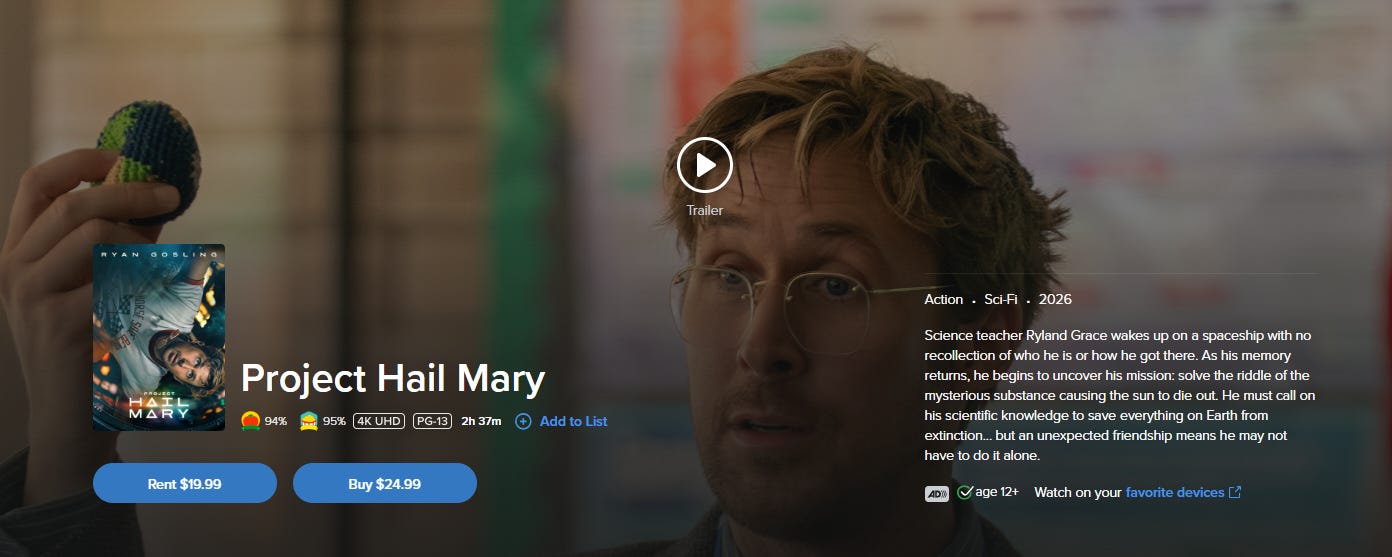
It helps to understand how a movie actually moves through the world, because there’s a logic to it that most people don’t think about. A film opens in theaters — though this is increasingly difficult for indie movies. Then it moves to premium video on demand (PVOD), sometimes even while it’s still playing in theaters, for around $20-$25. This was a post-COVID development that opened things up to more audiences. I welcomed this change when it happened, and still love having this early access if I can’t catch a new release in theaters.
From there it drops to standard rentals in the $10–$15 range before falling to $5–$10 over time. It eventually comes out on physical media, faster than ever before, for around $25 for Blu-ray and $30 for 4K UHD. And finally, it lands on streaming. That last step is where studios make the least money, and there’s a reason it comes last. Streaming services don’t do much for filmmakers. Residuals are largely dead. Paying $20 a month for access to thousands of movies and TV shows is genuinely incredible value for consumers, but it doesn’t leave much meat on the bone for the people who actually made those things. So the idea that your streaming subscription entitles you to every new release the moment it hits home entertainment is, at best, a misunderstanding of how the economics work.
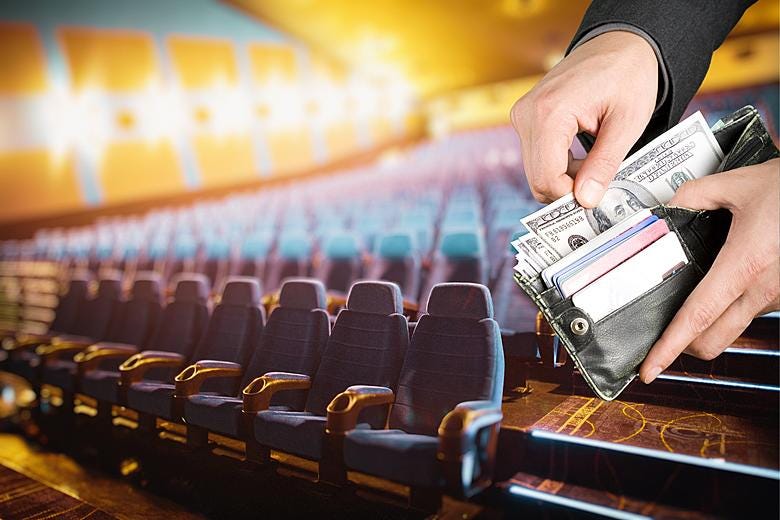
Does $20 feel like a lot right now? That is totally fair. Inflation is real and it’s hitting everything — groceries, gas, housing. I get it. But let’s put the number in context. To take your partner to see Project Hail Mary in theaters, you’re spending at least $30 for a standard showing, $40 or more if it is in IMAX. If you have kids and need a babysitter, add $20 an hour and suddenly you’re looking at a $100 night out for one movie. The $20 premium rental exists precisely for this situation: earlier access at home, at a cost lower than the theater, with no logistics required. If you want to watch it with the whole family, that’s $80 in theater tickets versus $20 at home. And if you can’t swing the $20 right now, that’s completely fine — nobody is making you. You can wait until the price drops or until it hits streaming as part of your subscription. What you’re paying for in the premium tier is early access. This option didn’t exist before. The fact that it exists at all, at any price, is great for movie lovers.
I understand the argument that a digital rental costs the studio almost nothing to distribute. But we’re not talking about material cost when it comes to art. We’re talking about the time, effort, and livelihoods of thousands of people who worked on that project. When you pay for a rental, you’re supporting them. It is imperfect, and the imbalance between what goes to workers versus what goes to executives and superstar talent is a real and legitimate criticism. But if you opt out entirely, you’re accelerating a future where AI-generated content fills the void, costs nothing to produce, and operates as pure profit. If we cheapen the support for the arts, the arts will cheapen their output. That’s just basic economics, and these major studios will not hesitate to keep their bottom line looking good at the cost of human artists.
So step back and look at what we actually have in 2026. That $50 Laserdisc is $110 in today’s money. $110 almost covers an entire year of Amazon Prime. It could cover an annual subscription to a niche streaming service like Shudder in total with money left over. With $110, you could get 5 of these premium movie rentals. You could get 20 standard rentals. You could get 7 movie tickets at $15 a piece. You could buy 5 brand new Blu-rays, and many more used or older catalog titles. We have never been in a better position as movie fans who want to watch things at home.
The options are better. The access is better. The speed at which we get to watch movies again after theatrical runs is much better. We have more control over how and what we pay to watch than at any point in the history of the medium. So $20 to watch a brand new film at home two months after its theatrical release? That’s a good deal. And we’re lucky that it isn’t even our only choice.
So if you genuinely love movies, you have to do a little more. Buy a ticket to the theater, especially for indie films if you can. Pay for a documentary. Buy physical media. Go to your local theater for a repertory screening. Find your local film festival. Support community exhibition events. This is not an art form that survives without active participation from the people who love it. To assume that a $20 monthly streaming subscription covers your full obligation to cinema is simply not enough — and in a world where the economics are already stacked against the people doing the actual creative work, it matters more than ever.
This was a really well-written piece, Jeff. Thank you for all the effort you put into this and for the insights you offered.
It is a sad reality that most folks expect movies watched at home to be ridiculously cheap, or even all of them bundled into the one or two subscription services they have at any given time. I'm not sure how we counter that trend. If it can even be countered.
But I believe platforms like Netflix have cheapened the perceived value of movies by casual fans. Films are a lot less glamorous for it. They've become little thumbnails that you can access instantly anytime you want. Not even a trip to the video store is required. And they're all included in a low monthly price.
I'm not saying it would be better if no one had digital home access to movies, but the low-price subscription model really affects people's perceptions.
I wish more casual filmgoers understood, as you described well in this article, how much effort, money, and a wide variety of people it takes to make a film. Whatever we can do to move people's understanding in that direction will be good for the industry.
I agree with you. I prefer having a mix: I go to see some films in the theater (usually independent, smaller films at our local theater), big blockbusters in a theater, but I also subscribe to several services, and buy physical media (for the movies I love). Waiting for sales (Criterion 50% off or Black Friday sales), allows me to get blu-rays or 4Ks under $15. That's an amazing deal. I also agree that we're in the best of times for movie watchers!