

Disney has named Josh D’Amaro, the chairman of the Disney Parks and Experiences division, as the next CEO. I believe that the detail of D’Amaro’s former position matters more than it seems for movie fans. To me, this move feels like another step toward a parks-first, experience-driven company at a time when its identity as a film studio already feels increasingly fragile.
I also can’t look at Disney naming Josh D’Amaro as its next CEO without seeing a worrying pattern across all of Hollywood. This isn’t just about D’Amaro - it’s more about what Disney, and really Hollywood as a whole, seem to be prioritizing right now. If that priority keeps shifting away from filmmaking and more toward monetizing existing brands, the long-term future of studio movies starts to look a lot less certain.
Before Bob Iger came back to “save” Disney, the CEO was Bob Chapek. Chapek was the chairman of the Walt Disney Parks and Resorts segment of the business, and he came in and led an admittedly disastrous period of Disney history. Bob Chapek’s tenure as Disney CEO (2020 to 2022) is widely viewed as a failure due to strained talent relations, public relations blunders, and financial miscalculations, leading to his abrupt termination and the return of Bob Iger. His leadership was characterized by cost-cutting measures, a controversial streaming-first strategy, and a lack of, or delayed, response to cultural issues, culminating in a loss of trust from stakeholders.
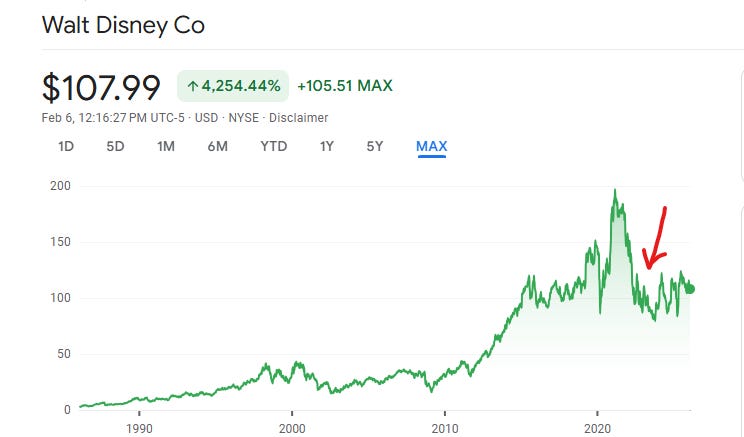
Chapek went all in on streaming, was tone deaf to the changing world around him, and ultimately did not know how to run a film studio. 2020 to 2022 were not good years for Disney. The stock fell by 44.58% in 2022, mostly because of a lack of streaming growth, declining park attendance, and poor box office output mixed with COVID and a slow return to theaters. Disney was failing because there was a man in charge who knew nothing about the entertainment business. He went all in on streaming, which had short-term results during a pandemic and then tapered off significantly. He wanted movies on Disney+ instead of in theaters.
If Disney had not had Avatar in 2022, which made almost half their annual box office returns, they would have been a total disaster. Iger had to step back in because the board was pissed, they had no faith in Chapek, and he was clearly in over his head.
So Iger stepped in, did his thing, and in 2025 Disney became the first studio to hit $6 billion at the box office since 2019. They were back. The stock rebounded a bit, still not near 2021 peaks, but better, and there was some excitement again about IPs like Star Wars and the MCU. Flops were still there, like Tron: Ares and the live-action Snow White, but at least movies were going back to theaters and off streaming services.
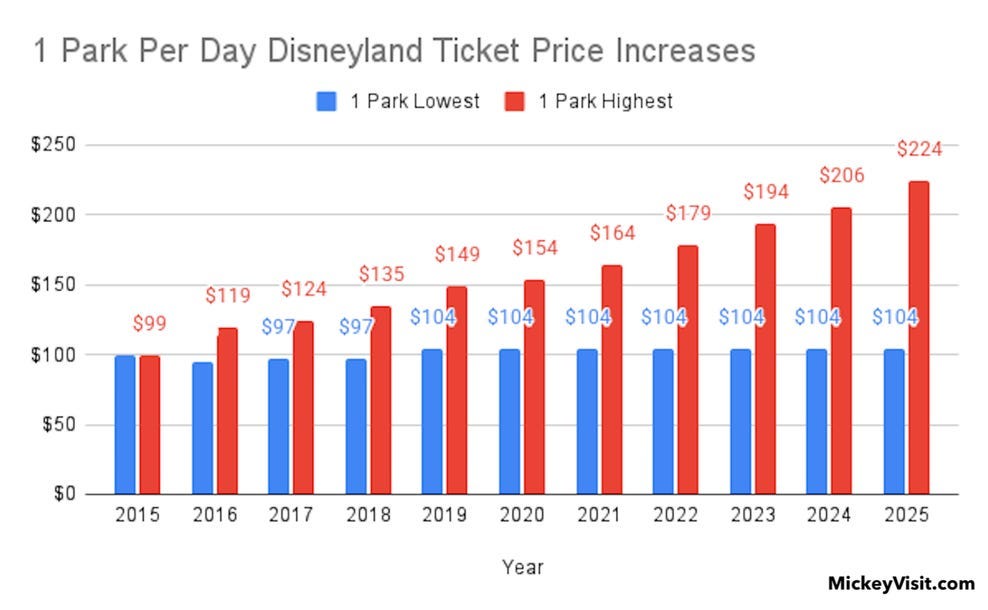
Now they are bringing in Chapek’s successor in the parks division as CEO, and it signals another shift in Disney’s strategy. They seem to be going all in on the theme parks, raising prices by 5 to 8% each year since 2020. Spending is up 40% at their parks. They seem to view the parks and experiences as the main money driver now, with studio films, Disney+, and the box office as secondary.
That’s troublesome because I can see Disney coasting on this. They can live off all the different IPs they already own that have huge fan bases, mail in the actual content, and put things like AI slop videos on Disney+ to keep the lowest common denominator engaged, while driving park sales and in-person experiences as their major revenue stream.
Especially as TV revenue shrinks each year from properties like ABC and ESPN, Disney is looking for an additional growth stream, and they seem to think it’s the parks. But what will it mean for their film projects? Probably less creativity. Less focus. Less risk. They are going to turn Disney into an expensive, experience-driven company that rides on the back of IP like Star Wars, Marvel, Avatar, and their animated classics to keep funneling money from audiences.
It’s going to get more expensive every year, catering more and more to the upper class while likely offering things like payment plans and financing to those who cannot afford it. They will become a resort company, not a film production studio.
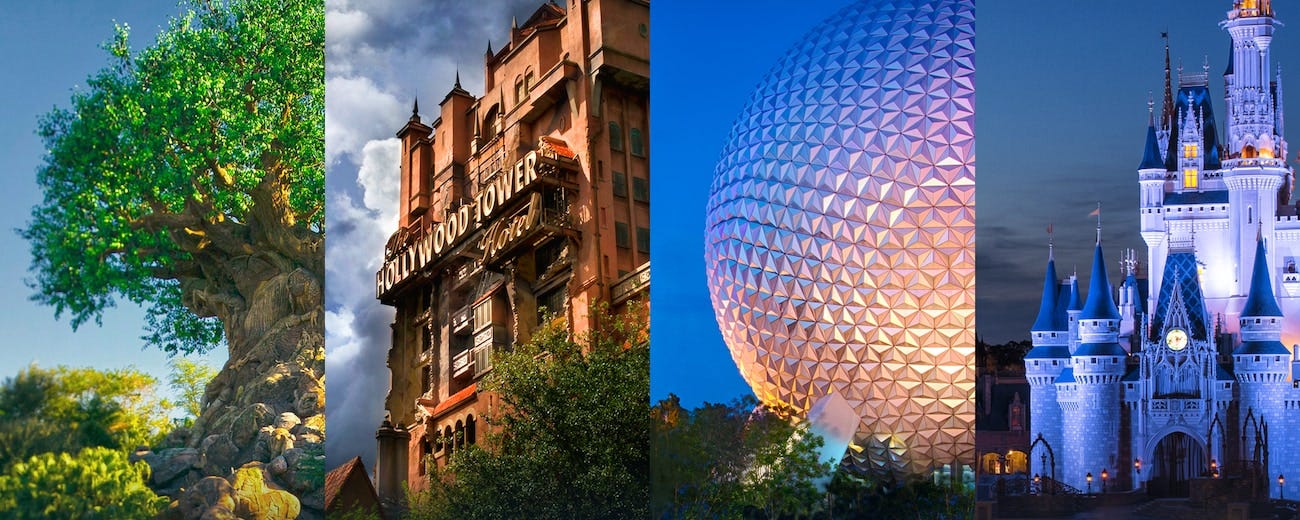
Walt Disney is probably rolling in his grave at this, because that was never the intention of the parks. The parks were built to celebrate the films they were making. It was a genius idea. But without the films, the parks don’t exist. After 100 years of films, they can coast on that success and not have to create anything new or unique, driving sales from nostalgia and their ultimately cult-esque following instead of doing anything new and exciting.
It’s sad. It’s another studio likely going away. Warner Bros. is for sale. Paramount is under hostile, and completely incompetent, ownership. Disney is going to focus on theme parks. We still have Universal, but the future of film is almost certainly in the hands of indie companies like A24, NEON, IFC, and Mubi, and self-financed films like the massive success of Iron Lung from YouTuber Markiplier, or the surprise smash hit Terrifier 3, an unrated gory slasher film with no major studio backing that almost cracked $100 million at the box office on a $2 million budget.
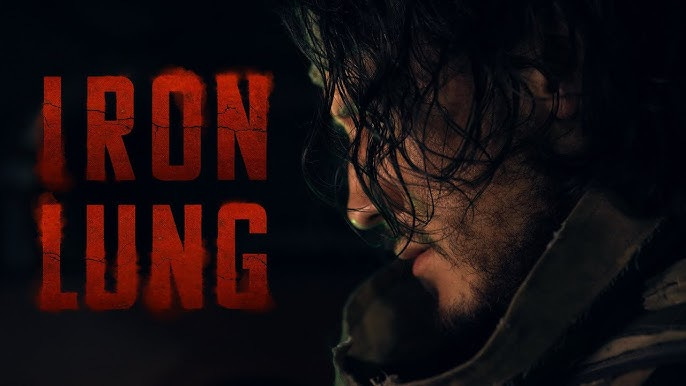
You will see more self-financed movies, more indie players owning the big screen, and more small productions with low budgets from studio offshoots like Searchlight and Focus Features mixed in with those indie players, alongside a couple of big tentpoles each year from the major studios.
Hollywood is dead. The studio lots are dead and empty. The future of film is not in the hands of Disney, Warner, Paramount, or even Netflix. It is in the hands of smaller companies that are still taking risks and making unique movies like the ones we grew up on, instead of constant IP-driven sequels and franchise films that others will churn out, likely in the near future with AI, catering to the lowest common denominator.
I hope it isn’t true. But everything I see points to this shift, and it being a permanent thing. Disney’s choice of CEO, Netflix buying legacy studios, and Paramount’s disastrous ownership focused on news instead of film all suggest that Hollywood is falling apart.
I hate how right you are in this article. Just sad to see the state of the big studios and Hollywood in general. Also really hate the idea of streamers like Netflix rising up to take their place. Great article!
I see too many people addressing Josh as Chapek's successor in the parks division. The big difference is that Chapek went from a guy that sold VHS and DVDs and plush dolls to being handed the parks as a path to grow him into the CEO. Josh on the other hand went from running Adventures by Disney to President of Animal Kingdom to Disneyland and then back to running all of WDW before being promoted to running Experiences. He's regularly seen in the parks and meeting fans, something Chapek never did.
Layer in the promotion of Dana Walden to CCO and it paints a very different picture about the state of Disney now vs 2020.