

Have you ever really thought about what superhero movies are trying to tell us? I’m not talking about the plot of each piece of media, but the underlying message of the entire genre. Because almost every piece of Earth-based superhero media, from comics and video games to movies and TV shows, is asking the same question. For the hero, how much of themselves are they willing to give up to be the one keeping everyone safe? For us, how much freedom are we willing to give up for safety?
Lately there’s been a lot of talk about Spider-Man: Brand New Day being propaganda for cops and surveillance. I know why people are saying it. But if you actually look at it, that’s not what’s happening. This movie is asking the same questions that the genre has always asked. all without a clear answer.
Spoilers ahead for multiple comic book movies, including Brand New Day.
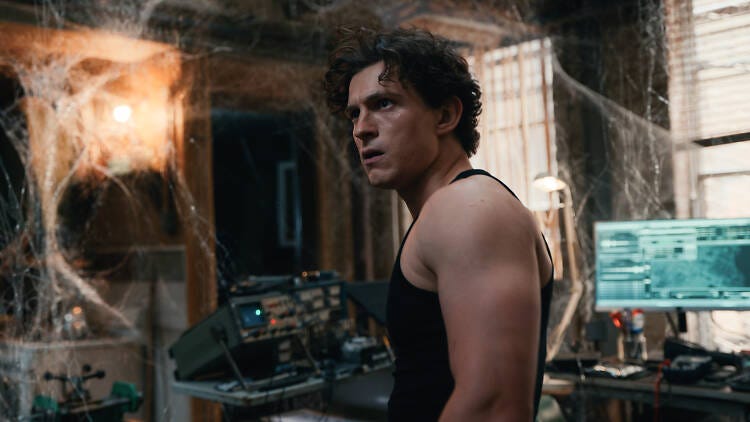
In Brand New Day, Spider-Man and NYPD detective Jean DeWolff are hand in hand. He’s her enforcer in a city that has a serious super villain problem. He’s lowering crime and closing cases, and he’s doing it with surveillance systems that look a lot like the Flock cameras that have been all over the news lately in real cities across the world.
We’ve seen this all before. Batman doesn’t trust the Gotham PD because Bruce Wayne knows it’s corrupt top to bottom. But he trusts Commissioner Gordon. That’s Batman in a nutshell. He is trying to clean up a crime-ridden city while working hand in hand with corrupt officers, because he believes in the city. And at the end of the day, he knows there’s at least one person inside the system who is worth trusting.
Spider-Man and DeWolff are the same relationship. He thinks he can trust her. And as he learns more about what’s actually happening — like what’s being done to Jean Grey and her sister — he learns there are other parts of that system (government organizations like the Department of Damage Control) you absolutely cannot trust.
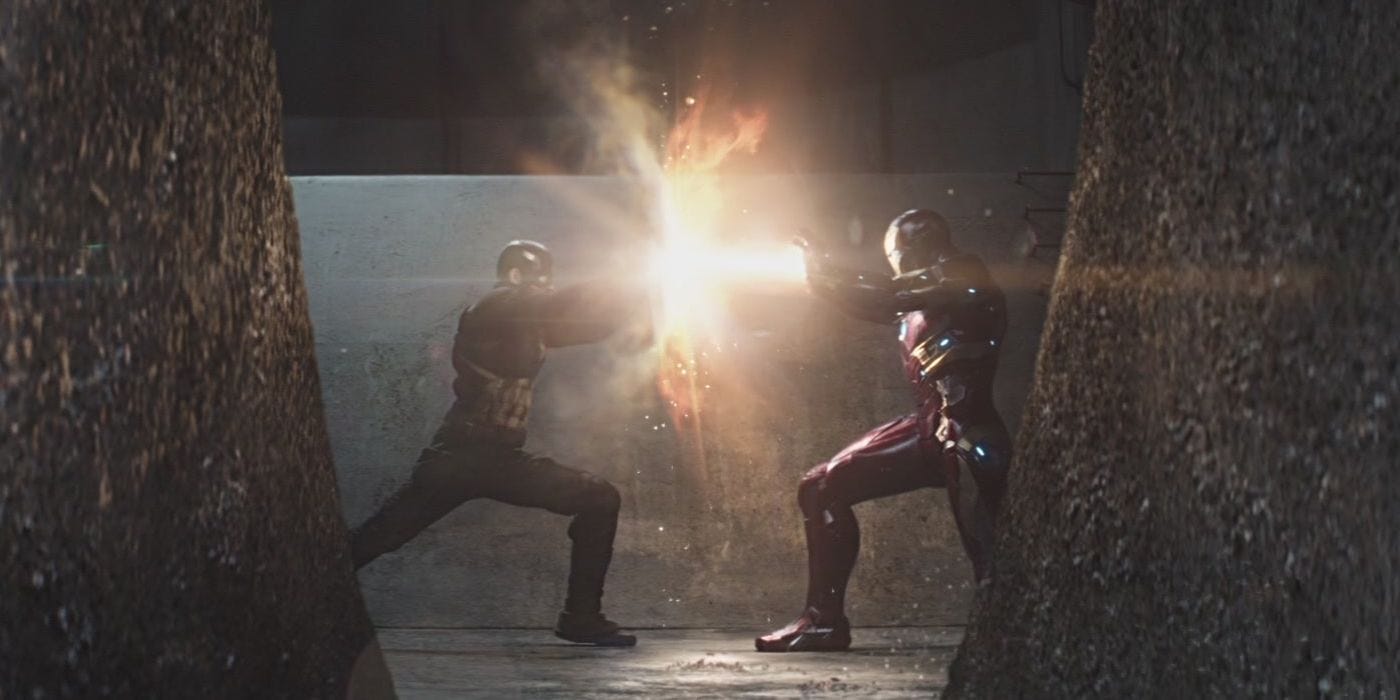
Captain America: Civil War covers the same themes at a larger scale. Iron Man is pro-institution. His whole stance is that he trusts them. He himself is an institution, a massive capitalist figure who owns a huge corporation.
Captain America is the opposite. He watched Hydra grow inside SHIELD. He has the proof about what happens when systems get into the wrong hands, and he doesn’t trust them as a result. But that fight was never really Tony versus Steve or a clash of personalities. It was about institutional trust versus institutional skepticism, and its a healthy conversation we should all be having these days.
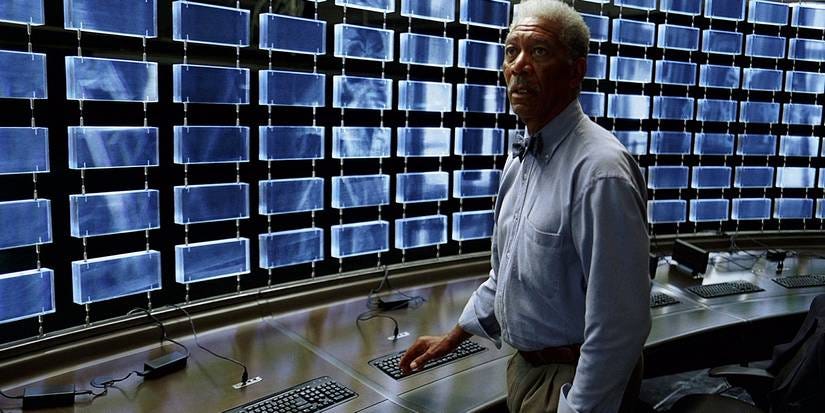
Like Brand New Day, what I like most about the best pieces of comic book media is that they don’t answer this question for you or tell you what to think. The Dark Knight doesn’t tell you excess surveillance is bad. Batman builds a citywide sonar network to track the Joker and turns every phone in Gotham into a listening device. Lucius Fox is horrified by the privacy overreach. Batman uses it to successfully catch the Joker, and Lucius destroys it on Batman’s orders upon the Joker’s capture.
The movie doesn’t say Batman was wrong to build it. And it doesn’t say Fox and Batman were right to destroy it. It just gives you the facts and lets you sit there with it unresolved. Because that is the core question in the post-9/11 superhero world. What are we willing to build, and give up, to catch the Joker? What about a serial killer? A terrorist? How much freedom do we hand over to protect our loved ones?
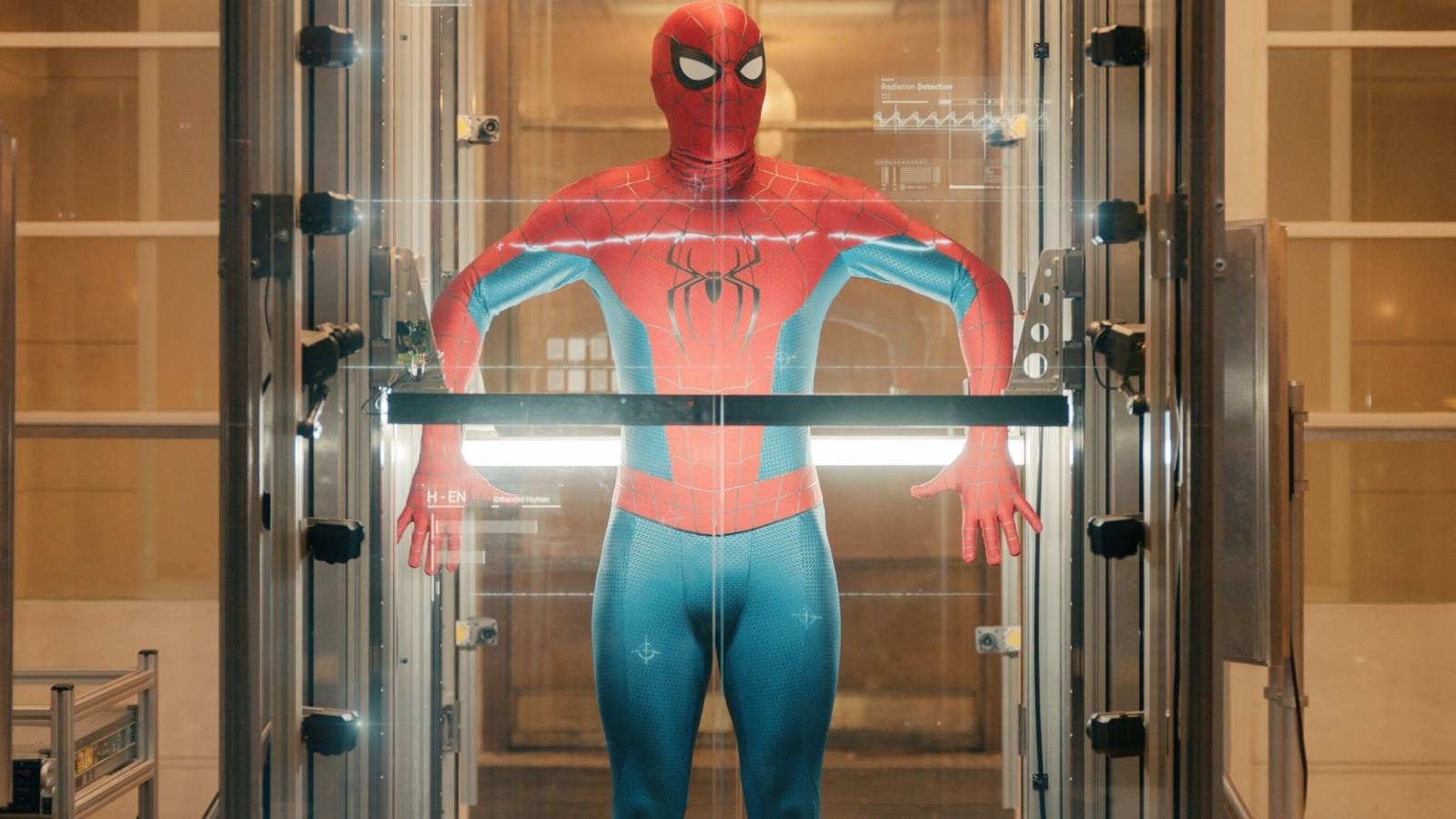
There’s a lot going on in these movies, and it only reads as straight propaganda if you’re already looking at it through one political lens and refusing to see it any other way. Spider-Man is 100% overreaching his bounds with the use of private surveillance cameras to monitor New York. But he is also dropping crime rates significantly and putting some truly terrible criminals away. Jean DeWolff tells him what he is doing is likely illegal, but she also isn’t stopping him, because its working. Its the moral dilemma these stories conjure up.
If you look at this media critically, not blinded by either side of politics or the rhetoric online, you get the same simple questions: What are we willing to give up for safety? What are we willing to look past? How much power do we give these heroes and organizations to protect us?
In real life, this conversation is even more difficult. I lived in the Boston suburbs when the Marathon bombing happened in 2013. Its hard to ignore that Boston PD caught the Marathon bombers because of surveillance. There were cameras everywhere along the marathon route and across the state of Massachusetts. They tracked these guys down fast considering they had nothing to go on at the start. These were two horrific people, caught using exactly the tools a lot of people say we shouldn’t have. In that case, it worked, and I don’t think many people would argue against it.

In that same vein, we have The Patriot Act, the TSA lines, and all the security theater we’ve absorbed since 9/11. The effectiveness of these systems is varied and hotly debated. People have still gotten explosives onto planes. We just got lucky the devices didn’t go off. Terrorists will always adapt and hit somewhere else. Yet after each attack we overcompensate, with more surveillance and law enforcement spending that isn’t solving the underlying issue. Nobody actually knows what the NSA is doing, or how far Flock cameras and social media monitoring tools are at this point. It’s everywhere now, quietly expanding each day.
Yes, surveillance caught the Boston bombers. It has stopped a few maniacs from attacking public spaces and carrying out horrific acts. It has also missed quite a few of them. But that same infrastructure used for a different cause — tracking people for their ethnicity, for their immigration status, or for the wrong opinion online — is the same tool doing something that most reasonable people would agree is wrong. The tool doesn’t know the difference. Only the people in power who are holding it do.
The major themes of superhero media used to be simpler, typically focused on the heroes themselves — Peter Parker versus Spider-Man, Bruce Wayne versus Batman. They were about the human weighing what vigilante justice costs them personally. From time to time they would jump into specific issues or get into current events, but not in a way like I have seen since 2001. Over the last twenty-five years the themes have been clear. How do these characters deal with surveillance, heavier policing, and government organizations that want to use them for their own agenda while maintaining their own morals about how far they are willing to go?
This is how I like to think about post-9/11 superhero media. It’s not a full PSA against these systems, but it’s not propaganda either. It’s the genre working through a Patriot Act world in real time, asking us to think about it and feel something about it, without being heavy-handed — which is probably exactly why so many people miss it.
Brand New Day isn’t propaganda for cops or governments or authoritarianism or any of the stuff people are pinning on it right now, because those readings usually come from people who already walked in with their politics decided. Sit with it for a bit with critical thinking skills and you see both things can be true: the tools can do good, but there’s a line somewhere that has to exist. I think we can all agree we would want the Marathon bombers caught. We also want the ideal version, to catch them before the crime, not after. This is the same impossible ask Minority Report covers with its story on “pre-crime”. But what are we willing to give up to make that possible?
That’s the question posed by Brand New Day. By The Dark Knight. In movies like Dredd, Minority Report, Civil War, and Winter Soldier. None of these will hand you the clear answer. Because there isn’t one. They just want to ask the question, which, to me, is a lot more impressive for a summer blockbuster to pull off than picking a side.